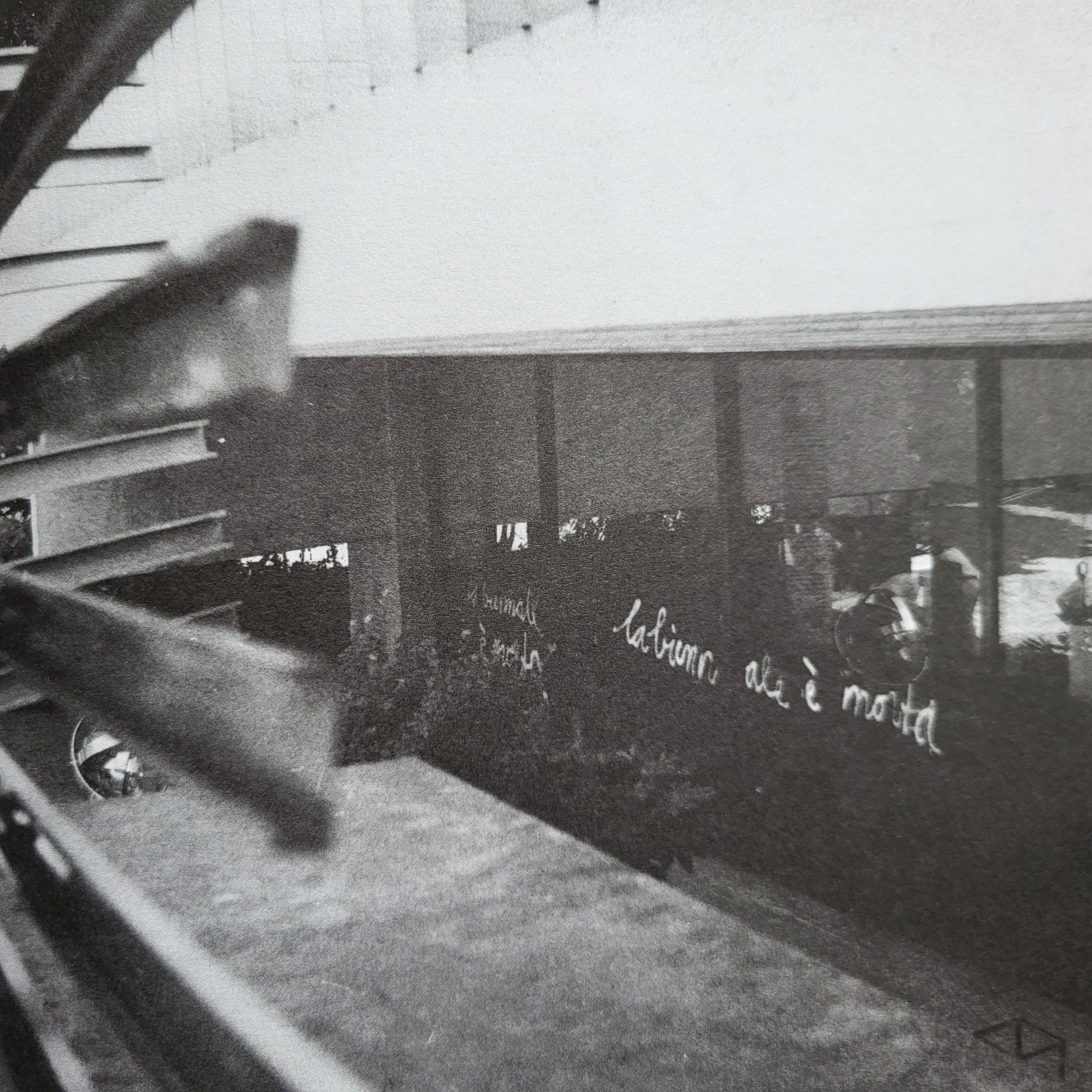
La Biennale è morta
Svensk text nedan
The Nordic Countries pavilion, where the Swedish section remained closed through the full exhibition period of the 34th Venice Biennial, 1968
After having seen most of the Giardini and the Arsenale, one becomes irritable and mostly wants to repress it all by having another spritz, or perhaps by slowly groaning “Tadzioooo” in longing for the youthful energy that has fled. Because the most obvious shadow to have walked along us, preview visitors through the congestion, passageways and pavilions of the Biennale is none other than death itself.
Death takes many forms. Perhaps above all through the fact that the Biennale itself rests on the increasingly obsolete idea of nation-states, alliances and pacts. The death of the Biennale has been declared before, also from a Nordic perspective. More on that later.
The Funeral and the Columbarium
That the chief curator Koyo Kouoh died a year before the opening is, of course, latently present. Not only in works where she is depicted as a fertility goddess inside the exhibition itself, or in a street mural of her in the city, but also through séance-like performances, plaques, parties and a general process of mourning that seems to permeate everything.
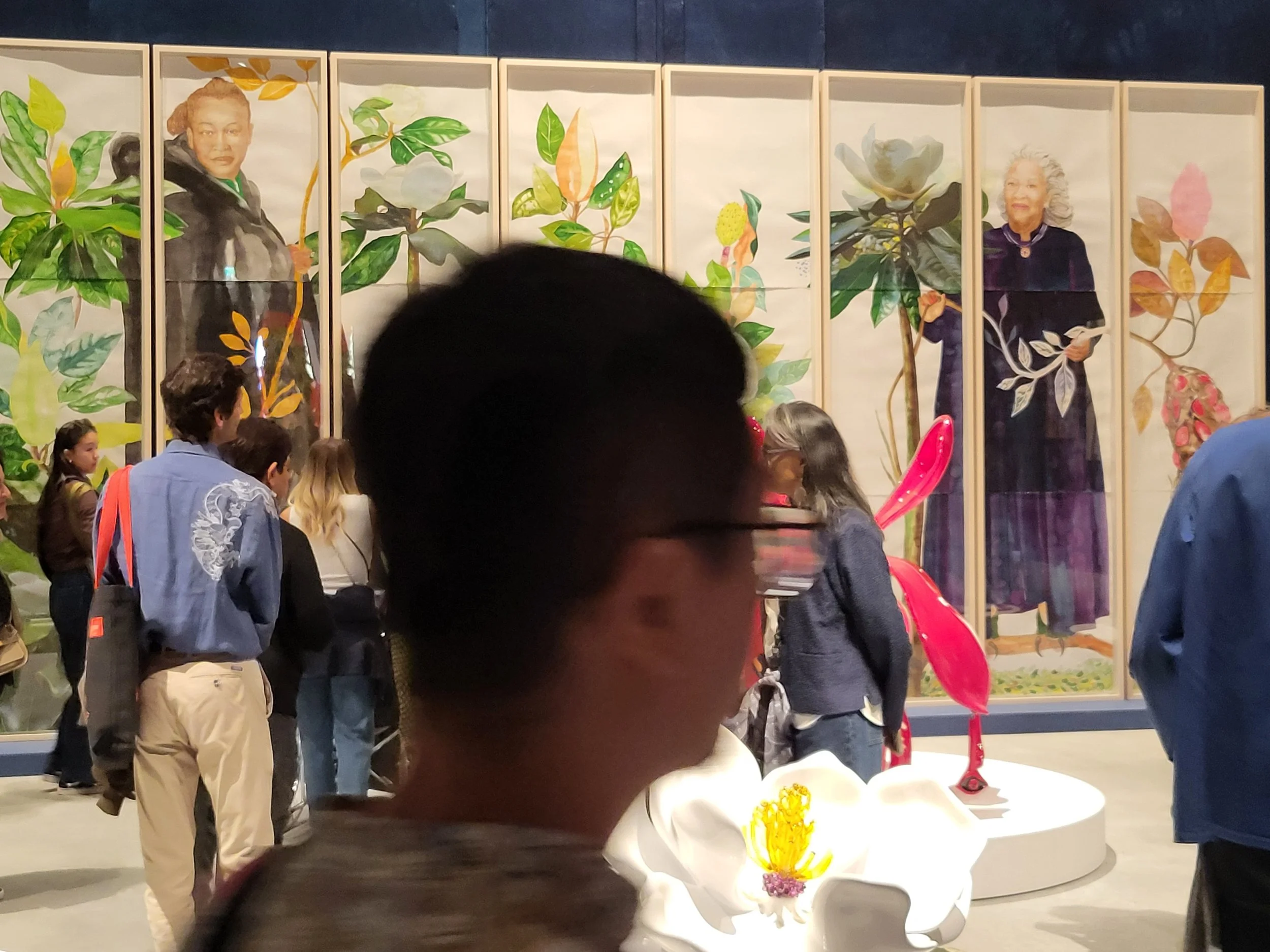
María Magdalena Campos-Pons, Anatomy of the Magnolia Tree for Koyo Kouch and Toni Morrison, 2026 on display in Giardini. Photo: Power Ekroth
Many have wanted to compare the art world to a religious world, where we gather in the museum as in a church or a mosque. If one extends that comparison, Kouoh here becomes almost canonized. Curators from all camps, and even the Biennale’s president Pietrangelo Buttafuoco, appointed by Meloni’s government, cannot praise her enough. It is not the mourning itself that grates, but how quickly it becomes ritualized and turned into institutional significance.
Kouoh, in turn, has had two “shrines” installed for two deceased artists: Issa Samb, also known as Joe Ouakam, from Dakar, and Beverly Buchanan, from the United States. Samb’s Laboratoire Agit’Art was a central node for artistic work, conversation and collective thinking, and it is difficult not to see a resonance with Kouoh’s own RAW Material Company: both appear as places where togetherness and institutional invention flow into one another.
The word “collectivity” echoes everywhere. It does so in the shrines, in the references to Samb’s Laboratoire Agit’Art and in the general mourning process surrounding Kouoh’s absence. But it also echoes more conflictual in the Biennale’s institutional structure, where the question of which bodies, nations and communities are allowed to appear quickly becomes impossible to separate from the question of which are kept outside.
Kouoh herself whispers from beyond the grave in her curatorial statement:
“In refusing the spectacle of horror, the time has come to listen to the minor keys, to tune in sotto voce to the whispers, to the lower frequencies; to find the oases, the islands, where the dignity of all living beings is safeguarded.”
A Biennale of this kind is, of course, never the result of one person alone. Kouoh’s curatorial team has certainly left its own traces. How the team continued to make curatorial decisions after her death is known only to those who worked on the selection: Gabe Beckhurst Feijoo, Siddhartha Mitter, Marie Hélène Pereira, Rasha Salti and Rory Tsapayi.
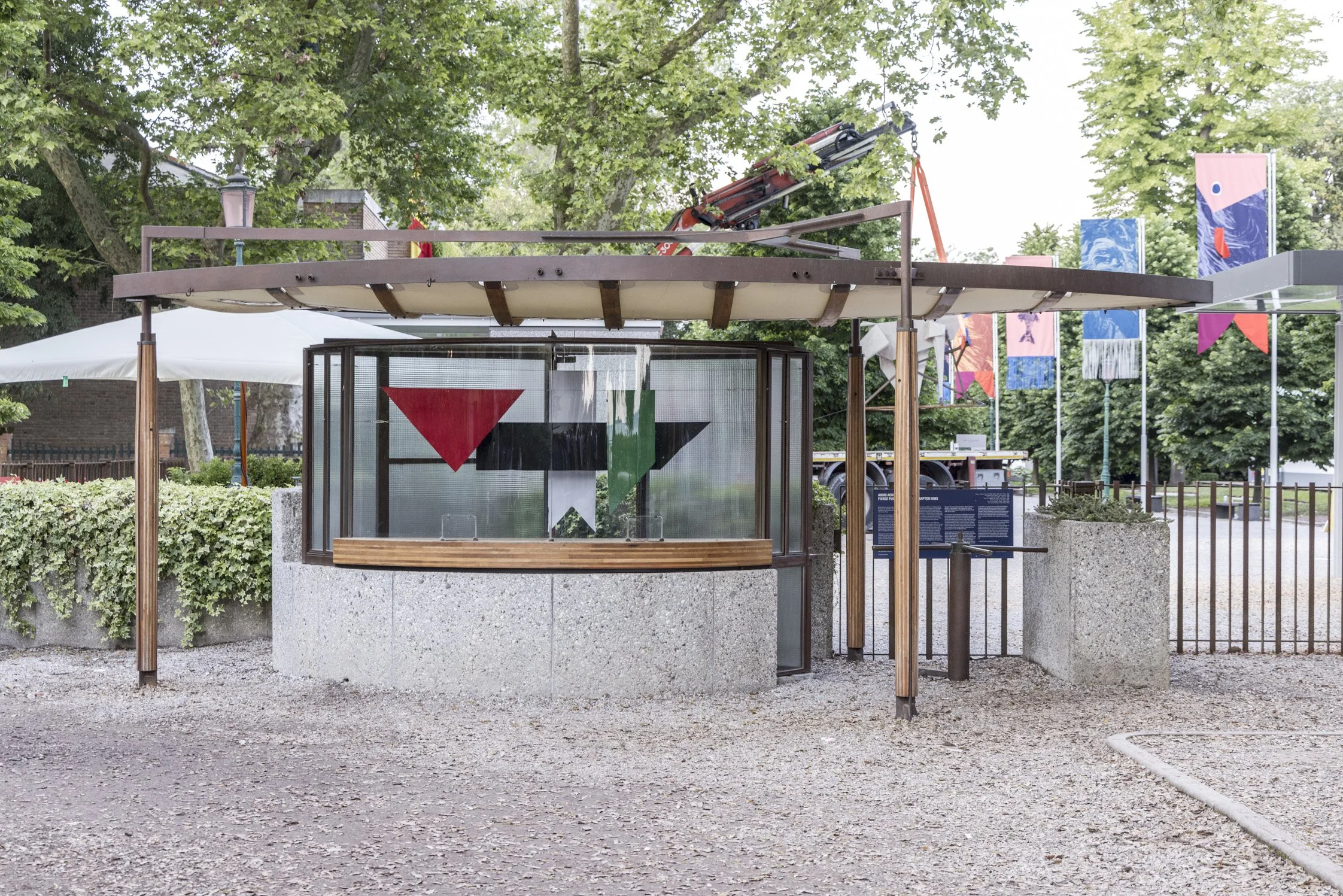
fierce pussy, we are here, 2026. Photo: Marco Zorzanello Courtesy: La Biennale di Venezia 2026
What we do know is that Kouoh had already passed away when the artist group fierce pussy was selected, and that she did not herself choose the work that greets us at the entrance to the Giardini: we are here, 2026. The work consists of a Palestinian flag in deconstructed form, installed in an abandoned ticket booth designed by Carlo Scarpa. Palestine, recognized as a state by 157 countries, has not been among the pavilions since 1948, when it was represented in what is now Egypt’s pavilion. But from the mass graves in Gaza to the Giardini, the words “we are here” echo with brutal clarity.
At the entrance to the Arsenale, before one has even had time to see the first artwork in the exhibition, one encounters the poem “If I Must Die” by Refaat Alareer, who was killed in an Israeli airstrike in December 2023, two weeks after writing it.
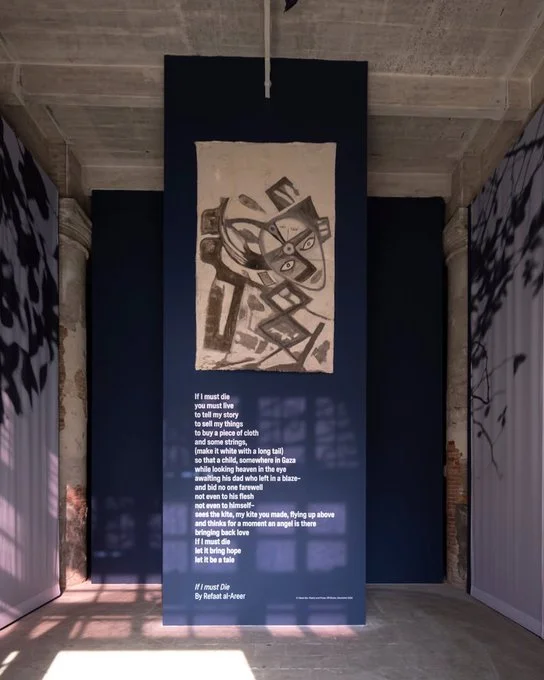
The main exhibitions in the Giardini and Arsenale are installed with extraordinary beauty, with indigo, midnight blue and dove-blue walls, and terracotta accents. This creates a sacral atmosphere. In all honesty, at times it feels like walking in a funeral procession through the Arsenale. The soundscape is subdued, partly because there are few video works and the sound has been turned down. Instead, sculpture, objects, textile and painting dominate.
The installation has been made with a steady and assured hand. But precisely for that reason, a problem also arises. The works begin to flow into one another and form a large Biennale cloud, where the edges become diffuse. What is most troubling is that they suddenly begin to appear as interior design: a columbarium for artworks. But this, too, is in keeping with the way the market and the Biennale have long worked together. The funny thing is that many critics still claim the exhibition is “depoliticized”, perhaps because they look at the outward gloss and colorfulness of the works rather than at the political and death-marked backdrops against which they actually appear.
Business as usual: the machine keeps grinding
In one sense, the opening days of 2026 were therefore business as usual, quite literally. There is still a lingering idea that the Venice Biennale stands relatively free from market forces, as though it primarily belonged to the world of ideas. But this year, as in so many other years, gallerists circulated around their artists’ works, hosted cocktails and dinners for artists, collectors and other key figures, with free champagne, canapés and broad smiles as lubricant. And as usual, Hans Ulrich Obrist has been triple-working and is curating no fewer than three exhibitions in Venice.
Twenty-five years ago, one could still hear the expression: “See it in Venice and buy it in Basel.” Venice opened shortly before Art Basel, and for the truly capital-strong collectors it was possible to map out a European purchasing route between biennial, islands, dinners and fair. Today the relationship between biennial and market has both changed and intensified. The market has spread out across a global calendar of fairs, private museums and collector-driven institutions, while Venice still delivers the legitimacy that can later be invoiced elsewhere. The expression could now just as well be reversed: “Buy art in Venice and see new art in Basel.”
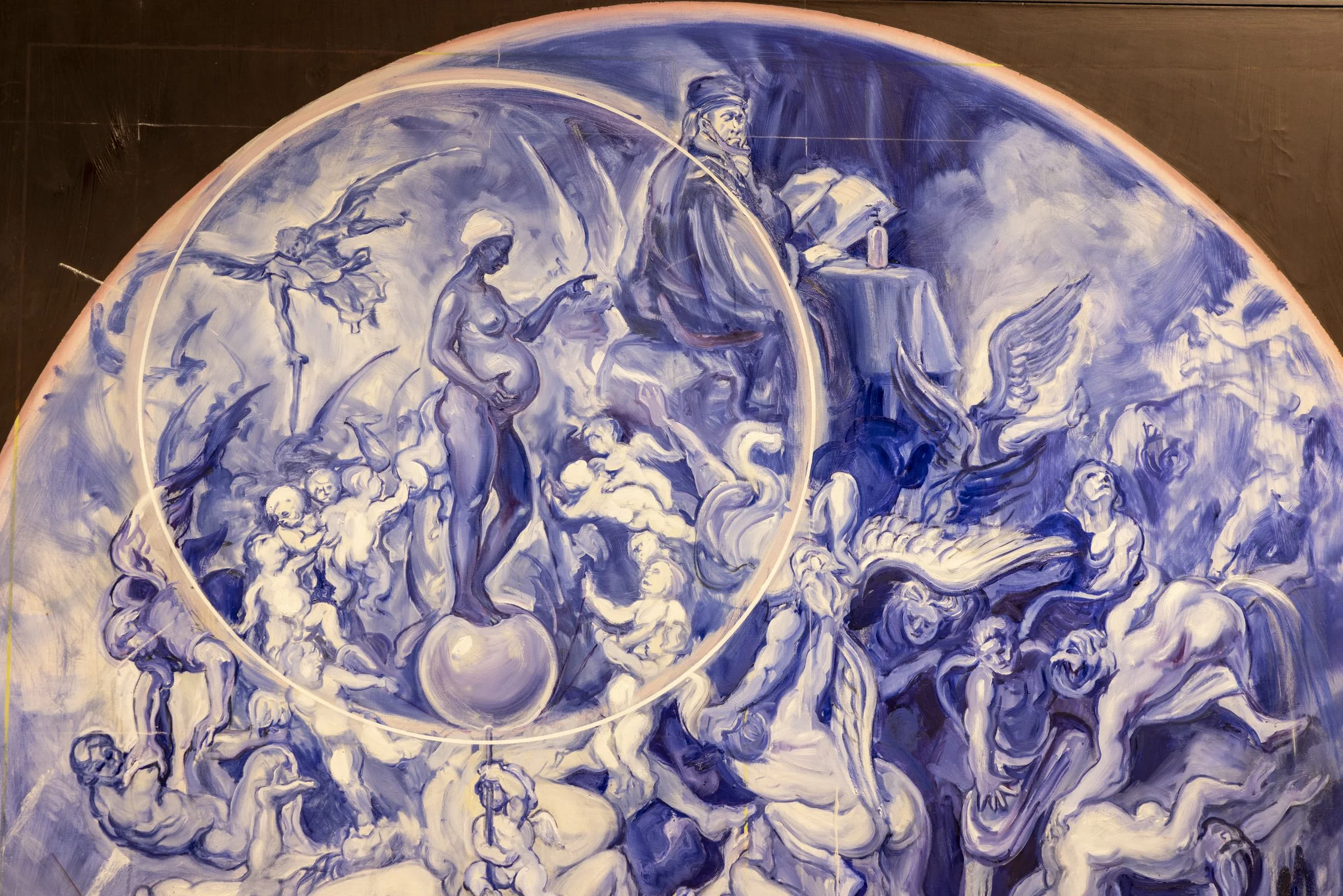
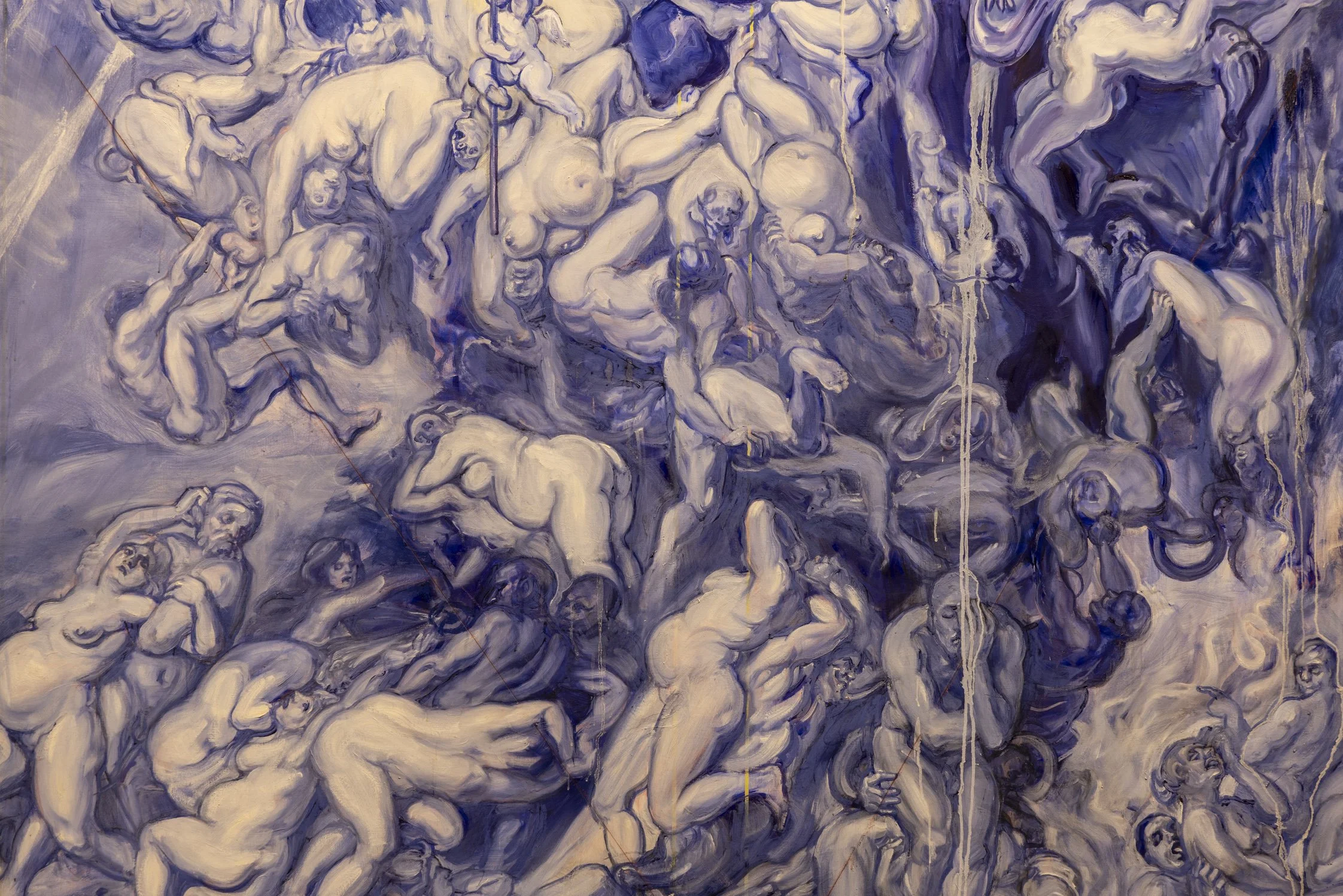
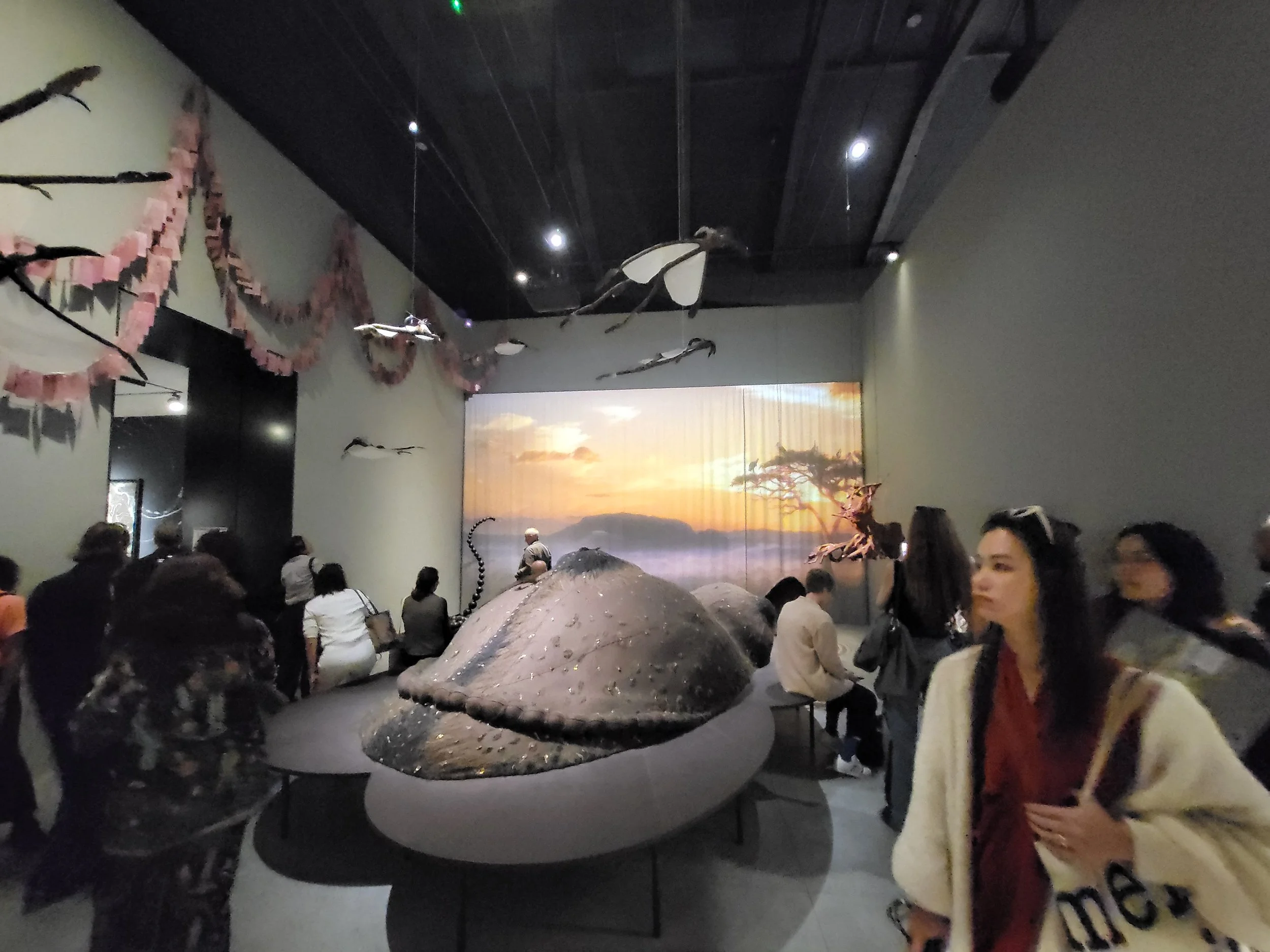
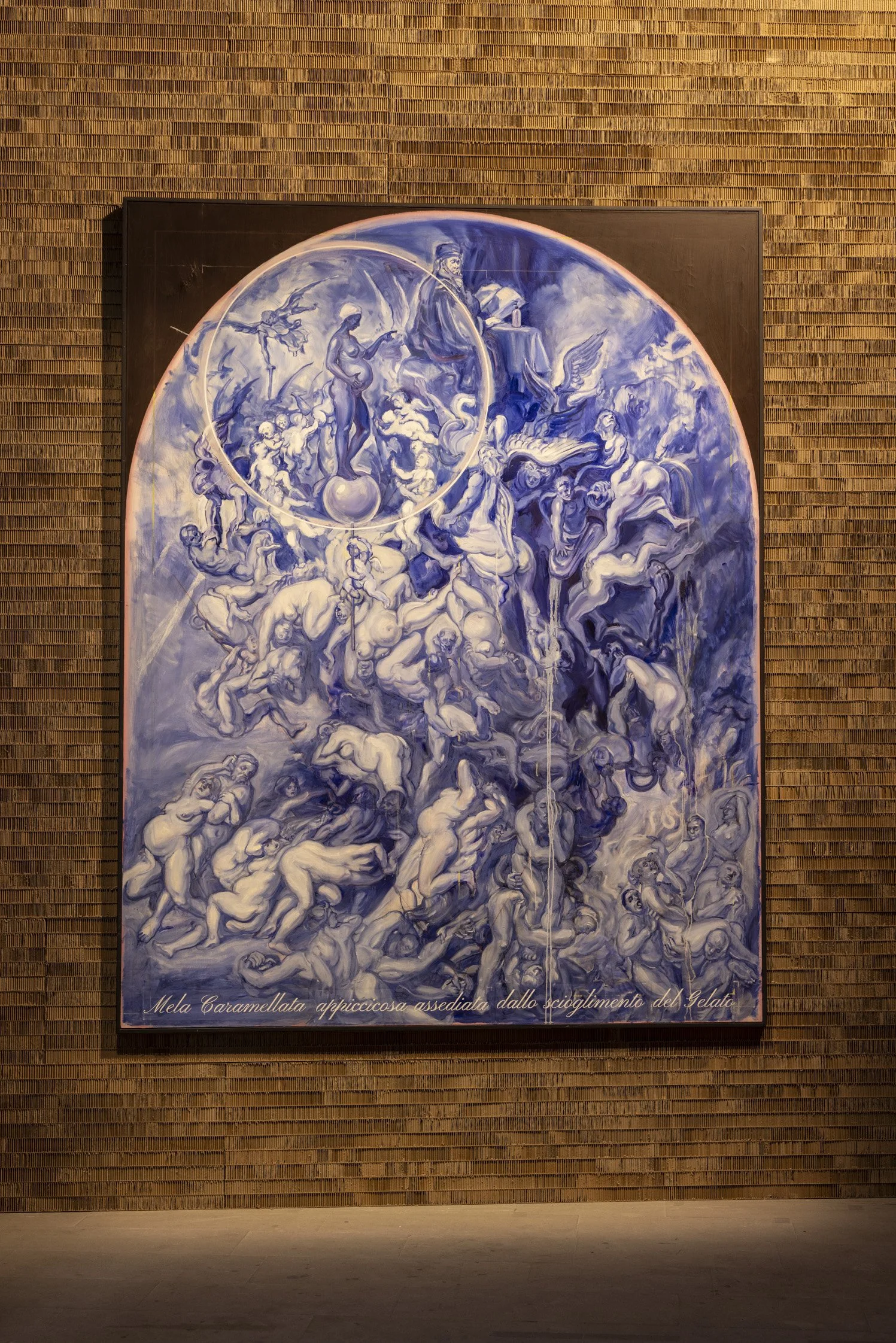
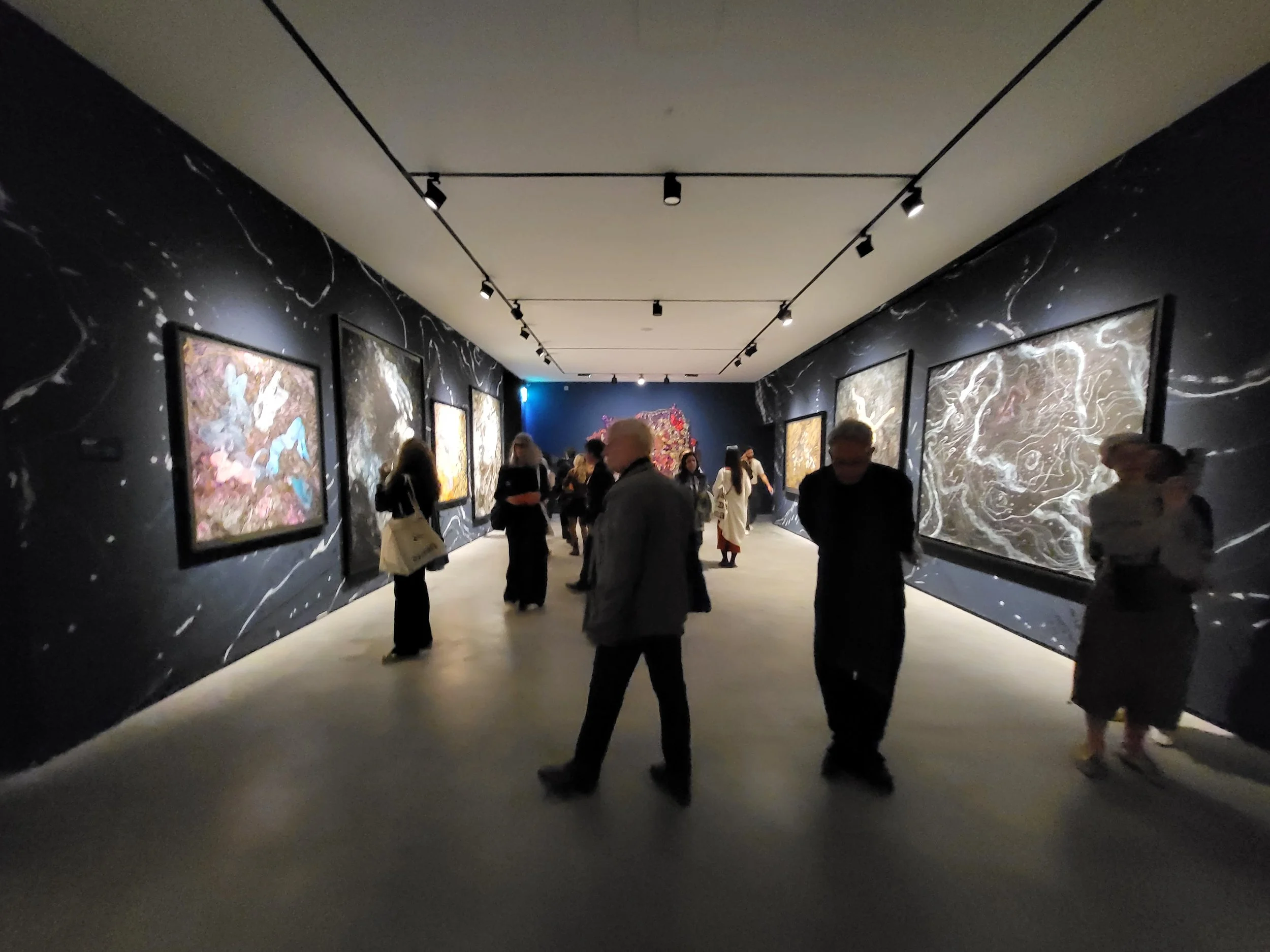
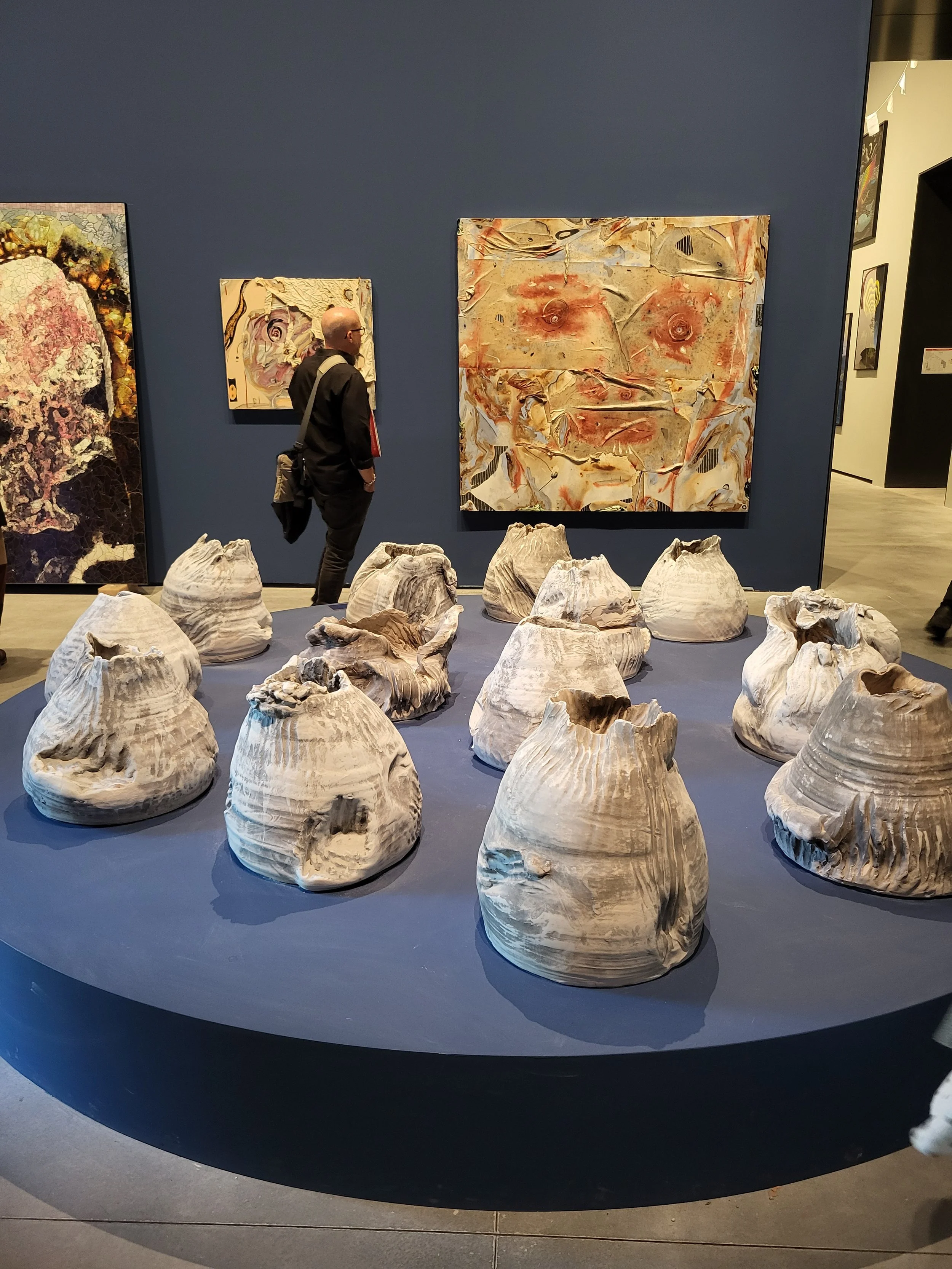
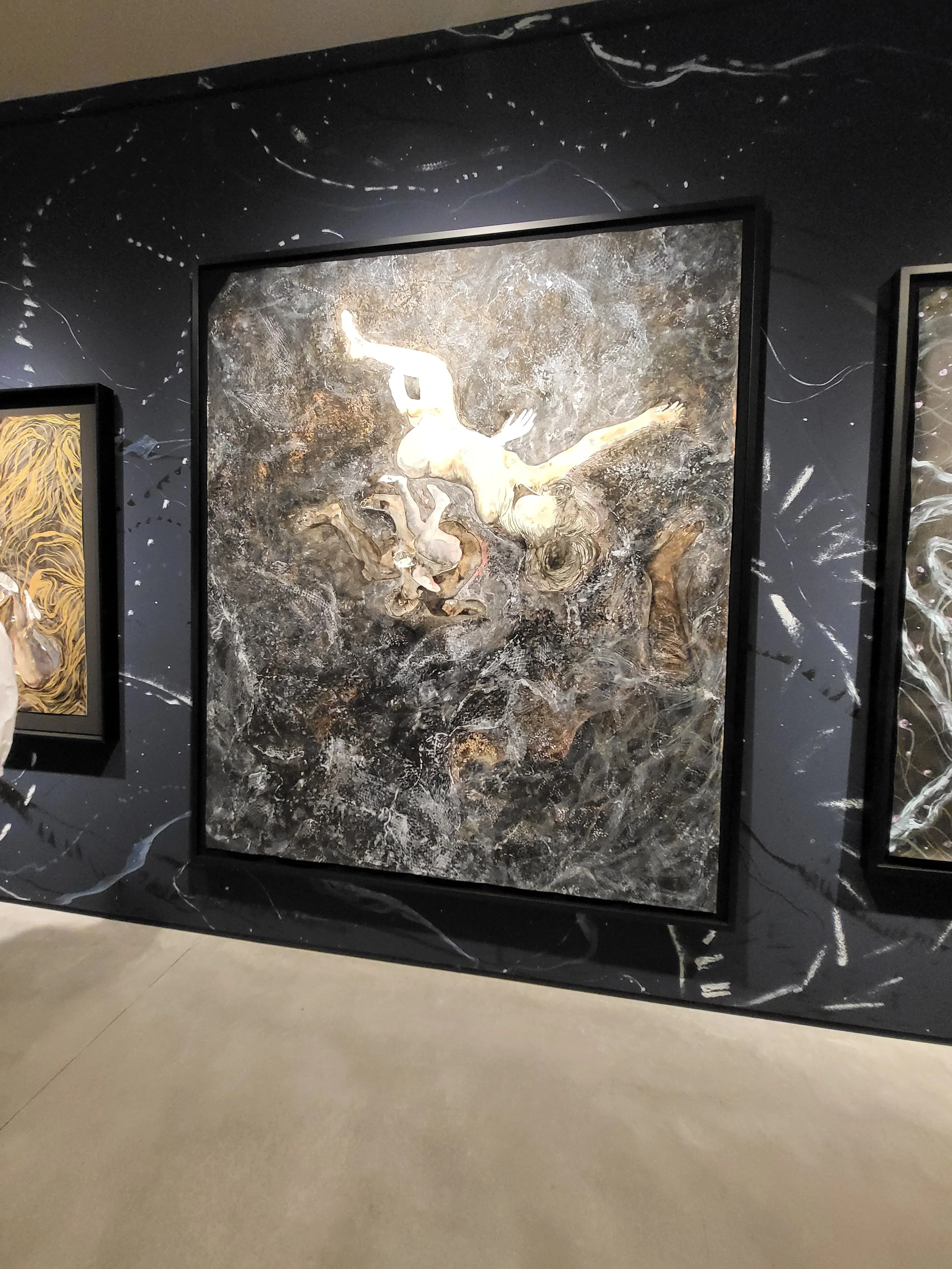
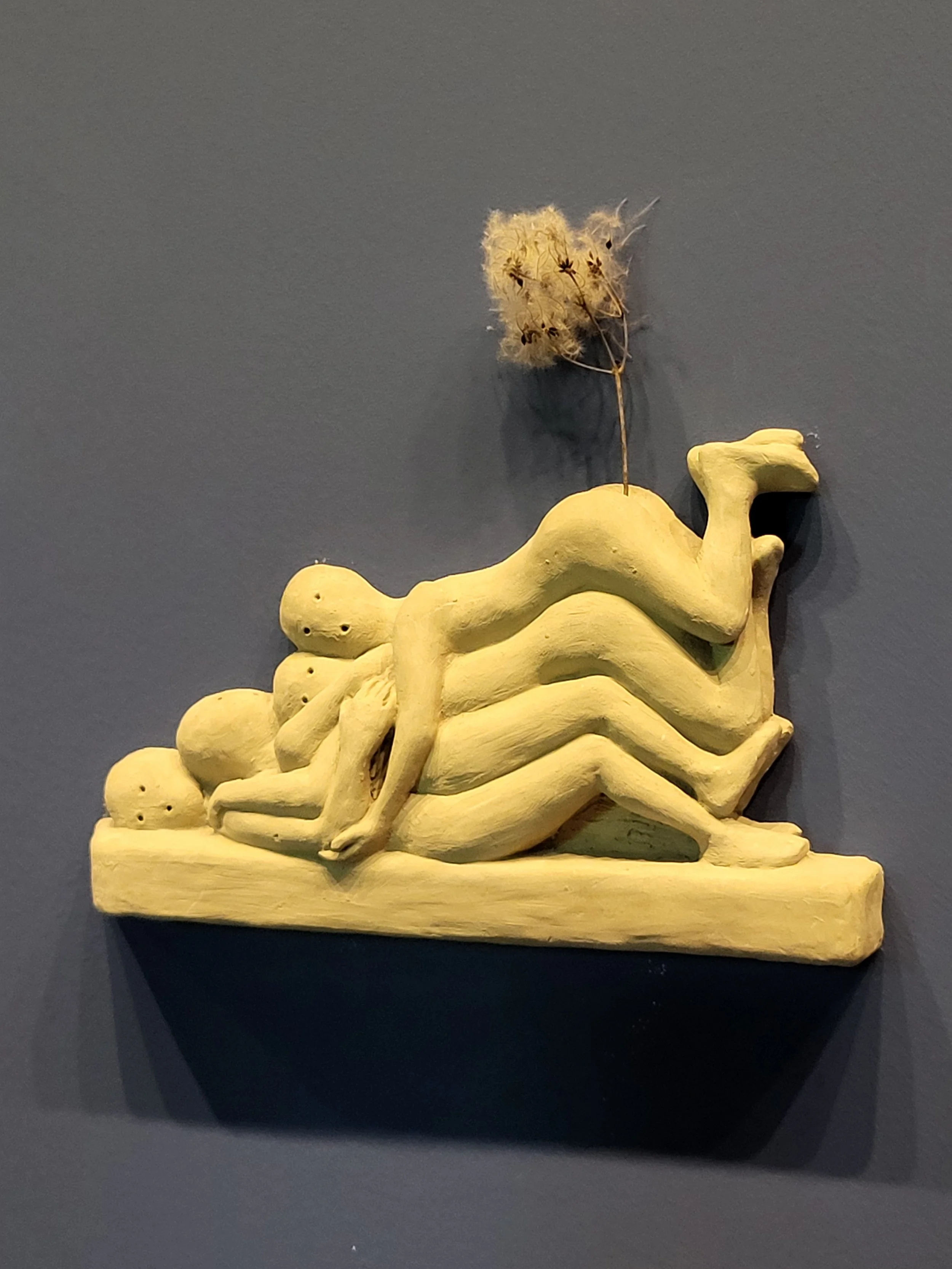
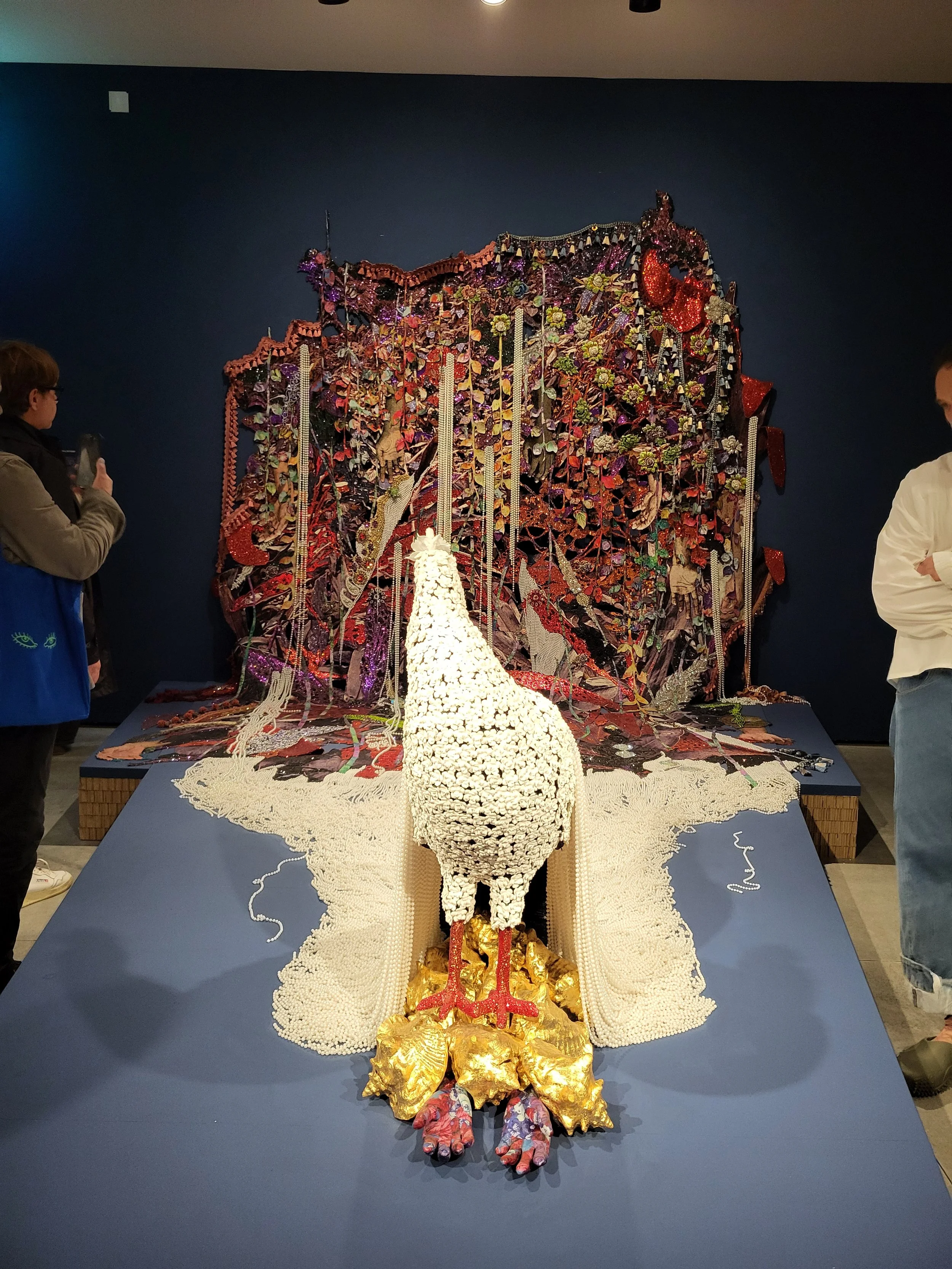
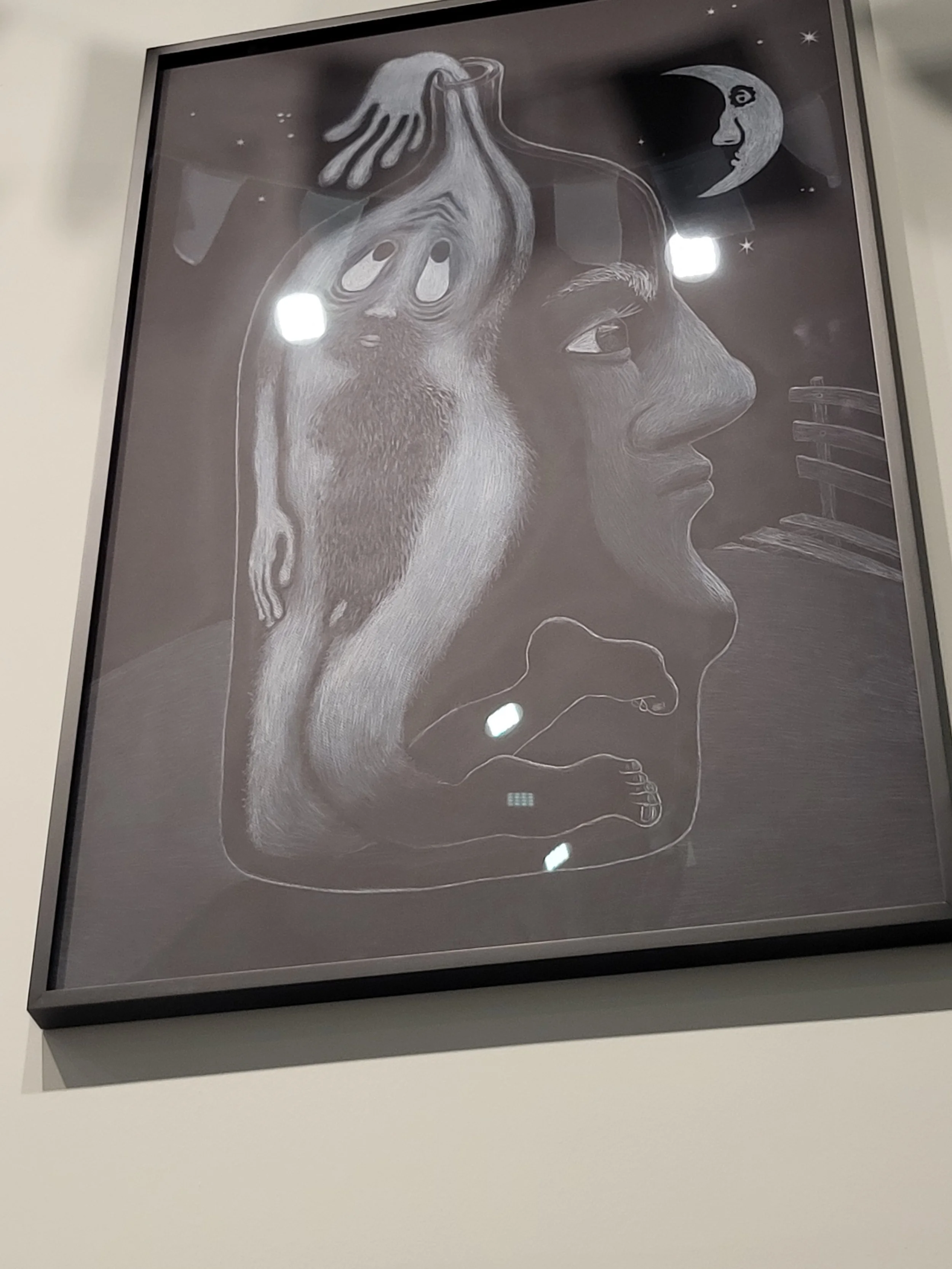
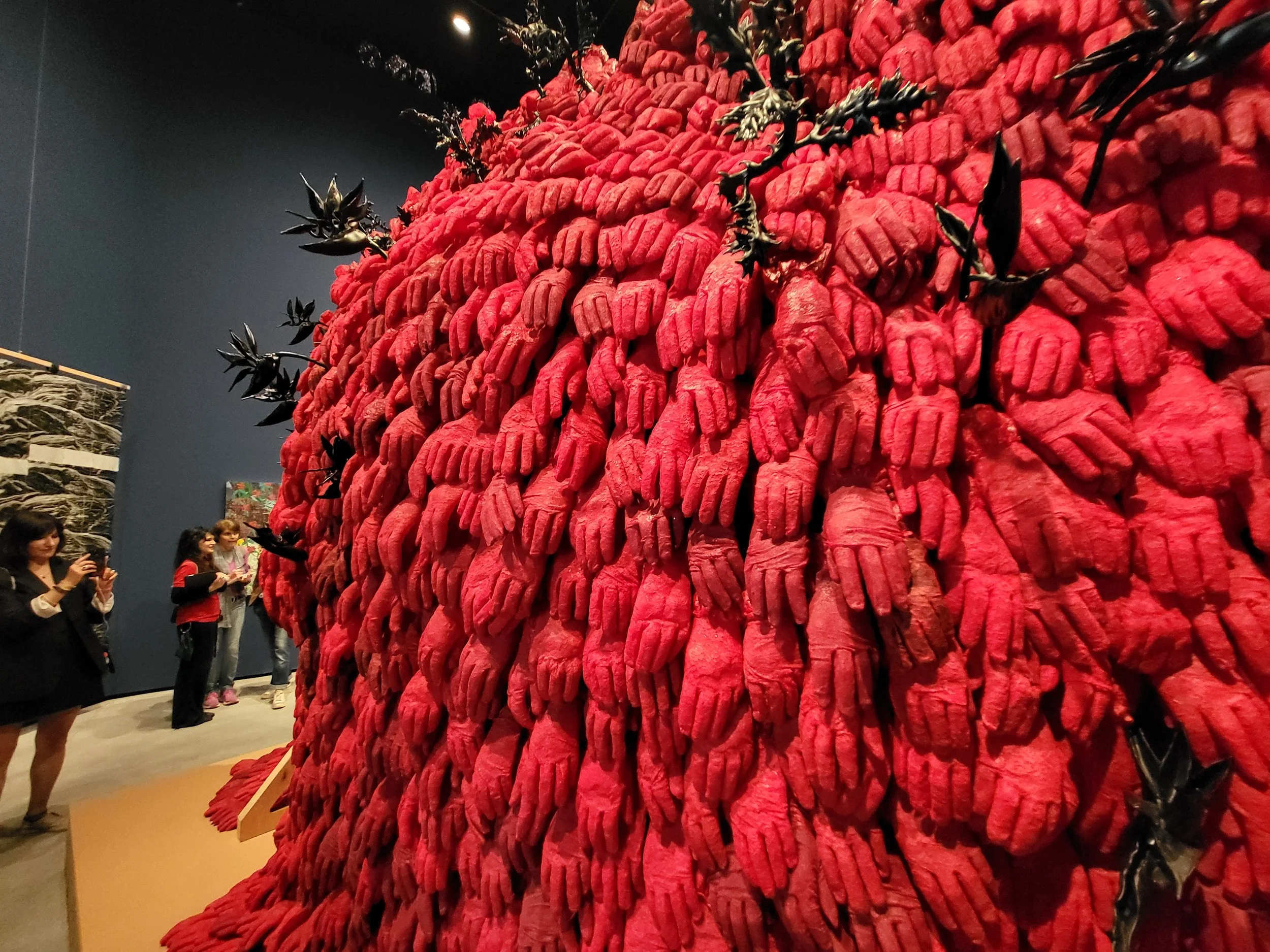
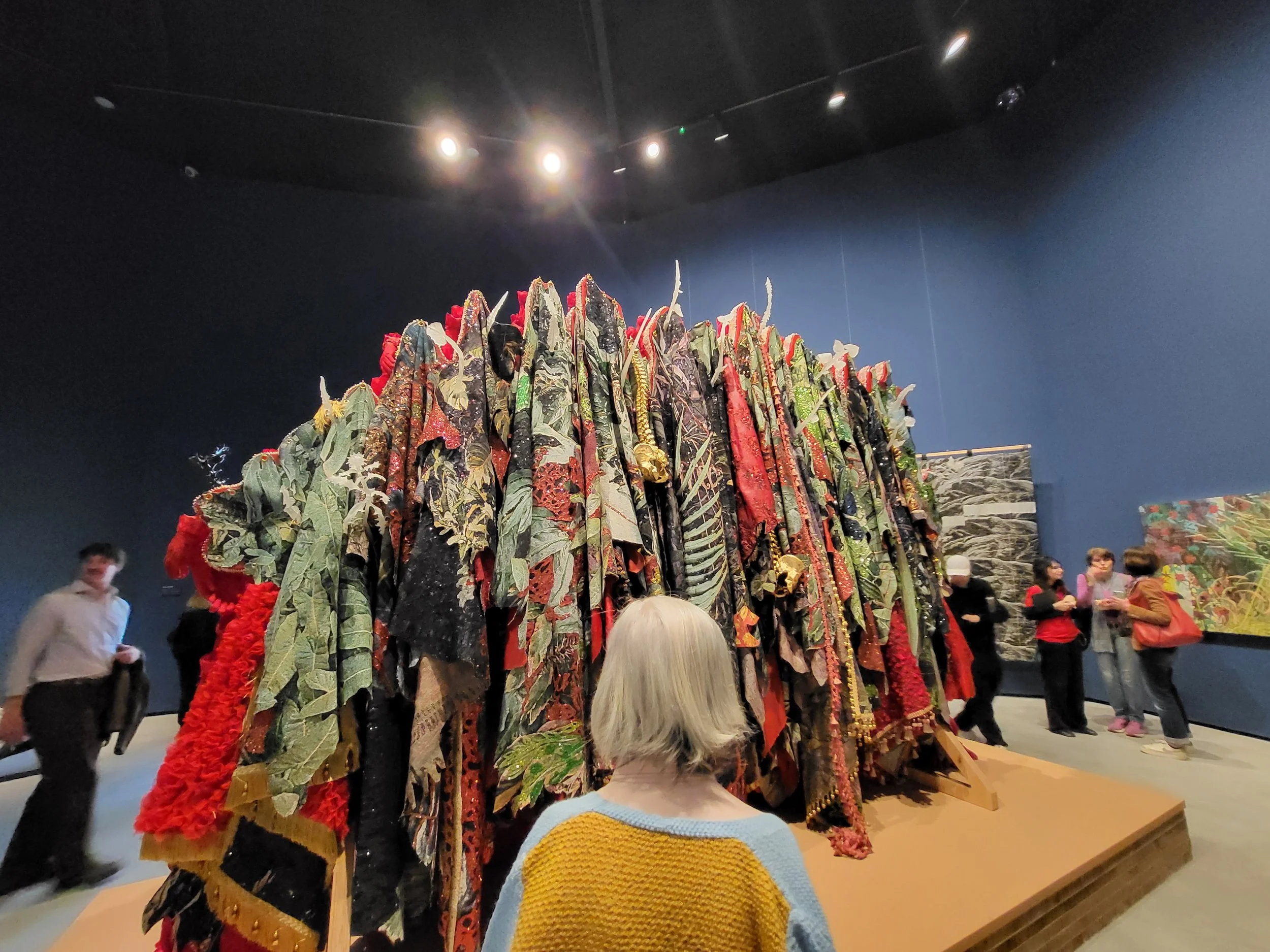
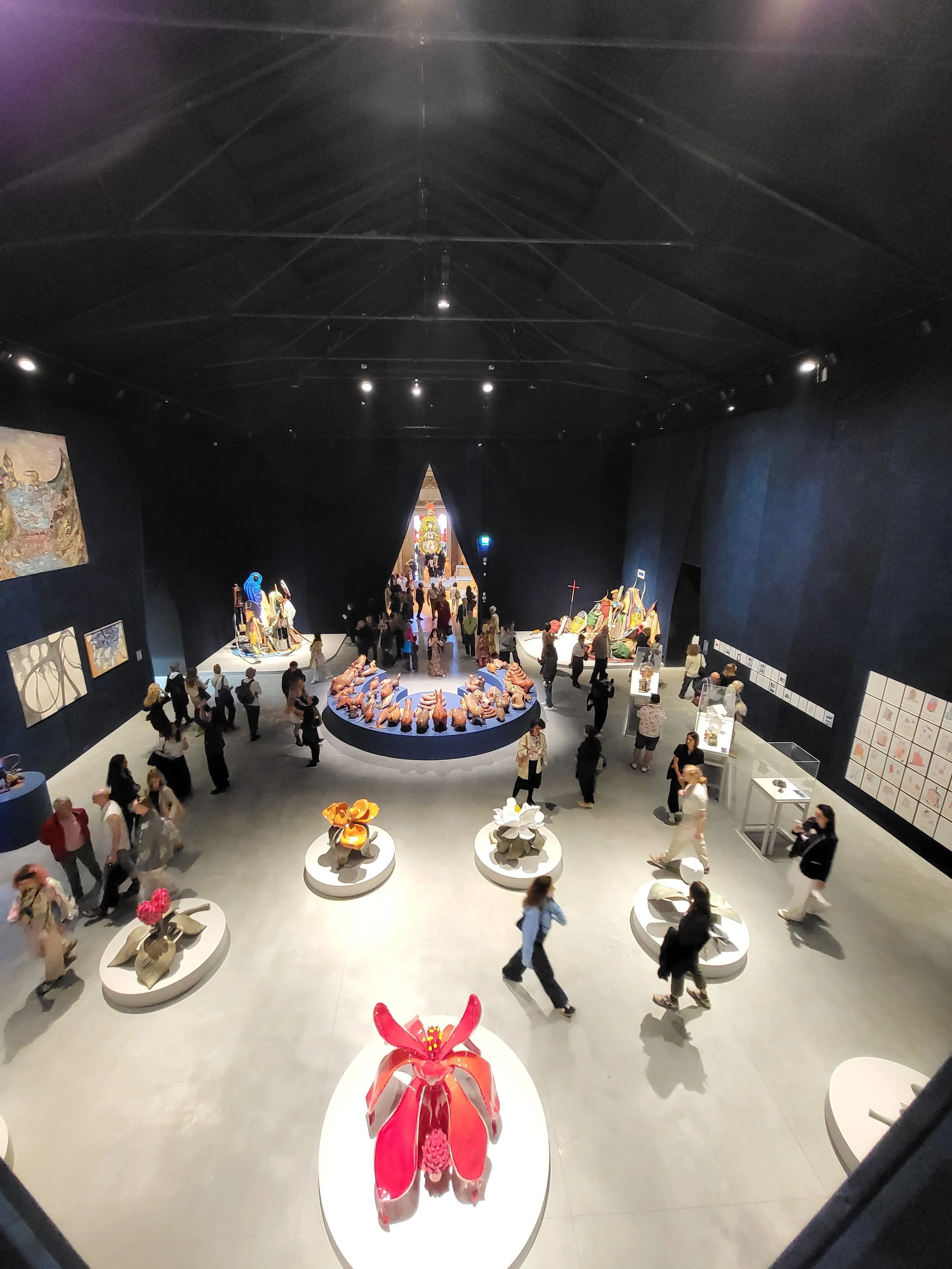
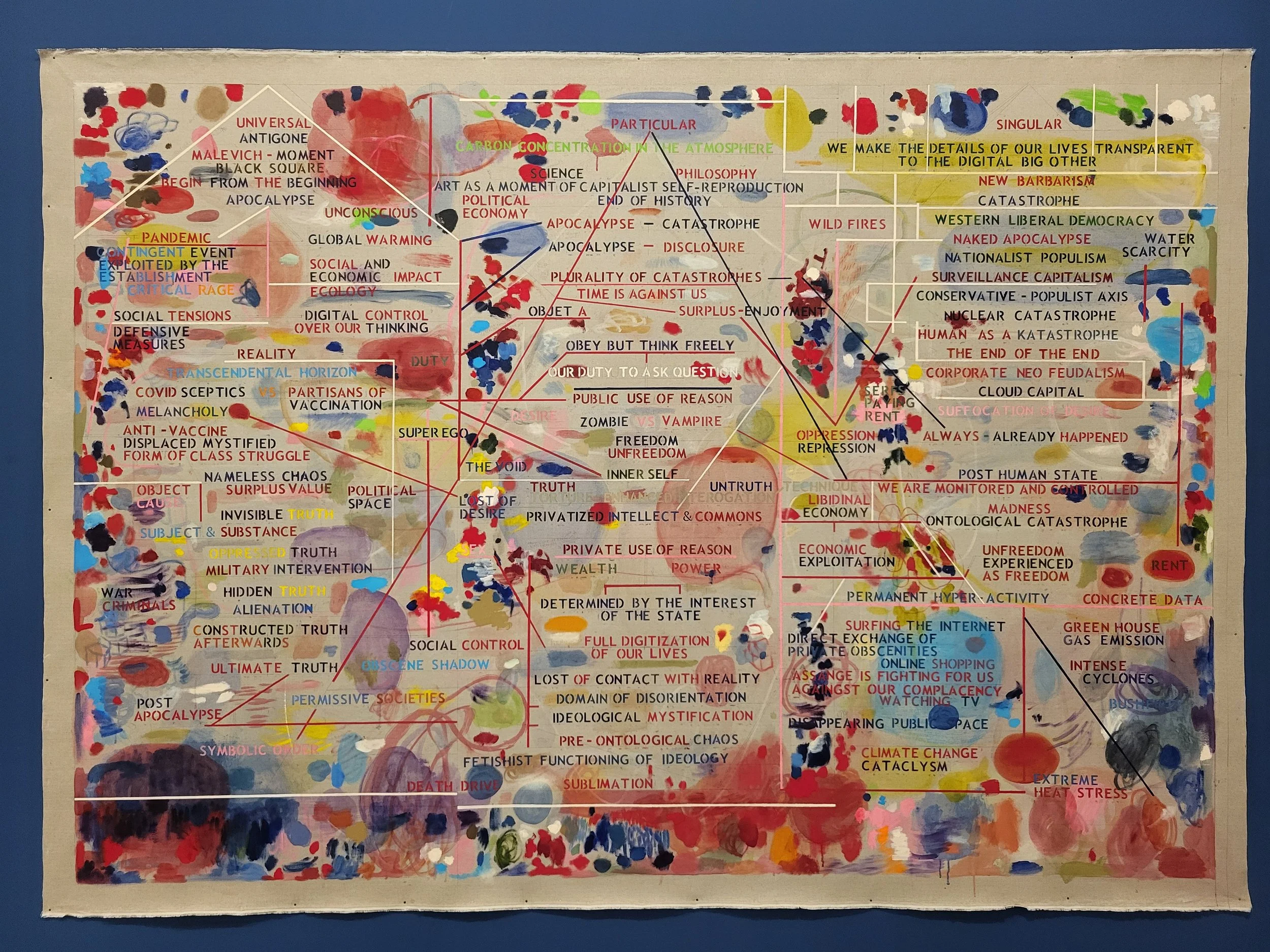
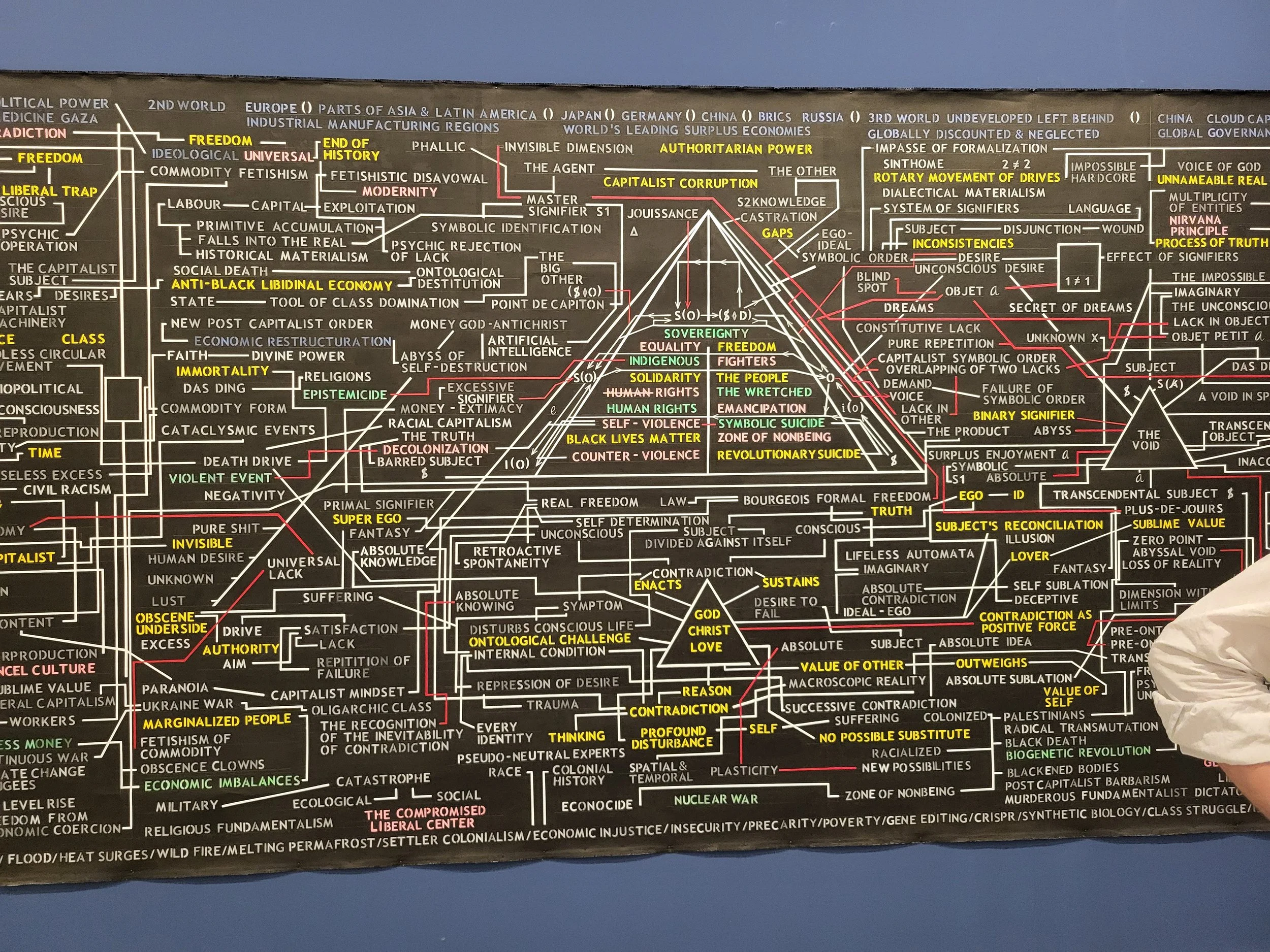
Impressions from the main pavilion in Giardini. Photos: Power Ekroth
Since then, Venice has moved the Biennale earlier, while the market has spread across a global calendar of fairs, private museums and collector-driven institutions. Still, people continue to come to Venice. And they still come to buy art. The fair wanted the aura of ideas. The Biennale wanted to pretend that it stood above the market, while delivering the legitimacy that could later be invoiced somewhere else.
Each national pavilion also tried feverishly to make “its” artists appear to be the best thing since sliced bread. Royalty, ministers and other official potentates crowded for attention, while certain pavilions quickly became talking points with winding queues. That one does not have time to see all the pavilions is par for the course; that one does not have time to see all the collateral exhibitions likewise. The blisters also seem to appear in roughly the same places on one’s feet. One noticeable difference, however, is that the private institutions have become more numerous, larger and more visible, and that they seem to be engaged in an internal competition over who can attract the most glamorous guests.
The Strike of Representation
And yet nothing was quite the same, at least not when compared to the status the Venice Biennale has held over the past thirty years.
For months, threads on social media have debated whether it is better to boycott the Biennale altogether, not even to travel to Venice and to let that absence, also as a tourism factor, become a protest against this year’s many different but interconnected controversies; or whether it is better to go there in order to protest on site.
One conflict zone concerns Russia’s return to its pavilion, albeit only during a limited part of the preview days. Another concerns the United States exhibiting a relatively unknown artist whose works look as if they were taken from a Donald Duck comic, after several other artists had publicly said that they did not want to participate, so as not to risk being read as Trump apologists. But the most polarizing issue has been Israel’s participation, not least because the presentation does not take place in its own pavilion, but in the Arsenale.
This was also one of the conflicts that led to the jury’s resignation. The jury, consisting of Solange Farkas, Zoe Butt, Elvira Dyangani Ose, Marta Kuzma and Giovanna Zapperi, first issued a statement saying that it would not consider pavilions whose national leaders are facing accusations of crimes against humanity. A few days later, the entire jury resigned, abruptly and with reference to the same statement. This not only put this year’s Golden and Silver Lions out of play, but also directed attention to the shaky foundations of the pavilion system: the idea that artists should still represent nations, while the violence of those nations is expected to remain outside the image. What does national representation even mean in such a situation?
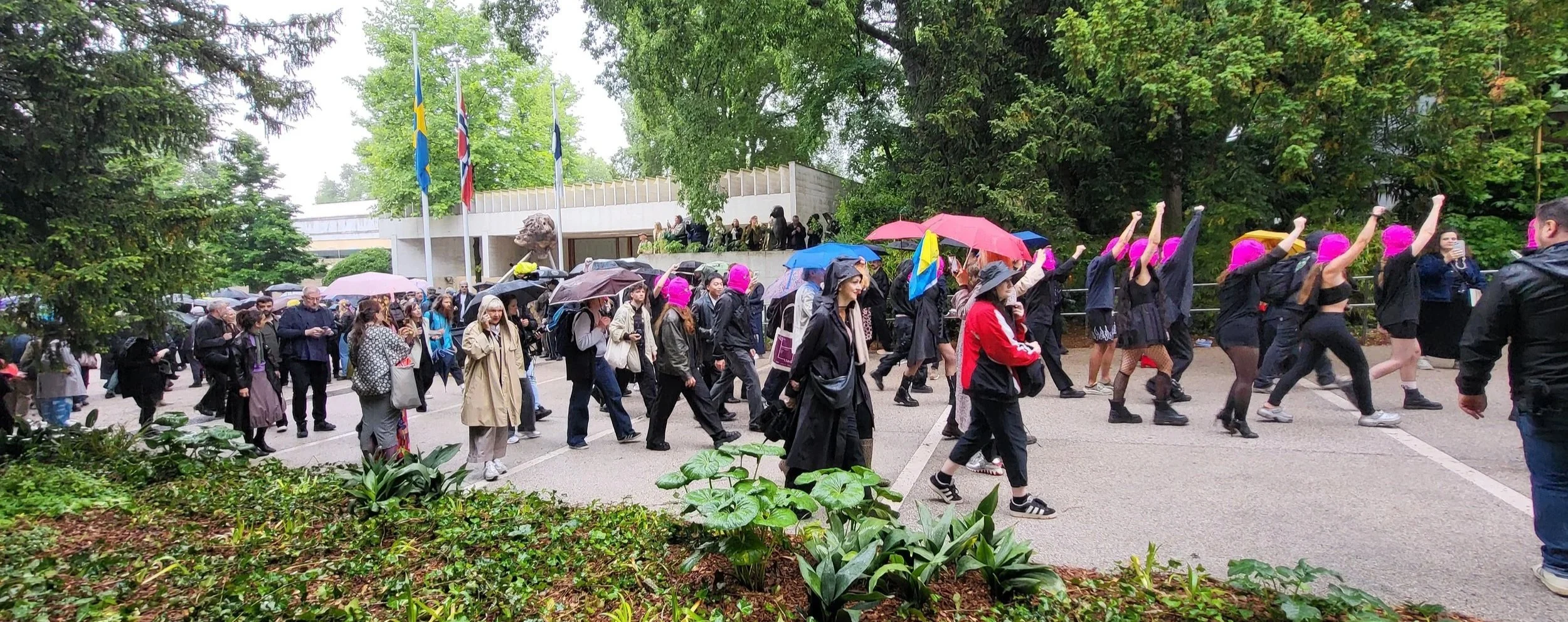
Pussy Riot and FEMEN protest walking away from the Russian Pavilion during the first press day in Giardini, 2026. Photo: Power Ekroth
Outside the Russian pavilion, Pussy Riot and FEMEN protested loudly. The European Commission has also withdrawn a grant of two million euros to the Biennale, citing Russia’s participation. The Biennale, for its part, has referred to the fact that Russia owns its pavilion and therefore has the right to participate, almost as if the pavilion functioned as a kind of diplomatic property. There is much that is strange about this: partly the Biennale’s alleged helplessness before the national logic of the pavilions, partly the EU’s decision to financially punish an entire Biennale structure — and above all the artists themselves — for the participation of a single country. If the criterion is warfare, the question immediately arises as to why the same logic is not applied to Israel and the United States.
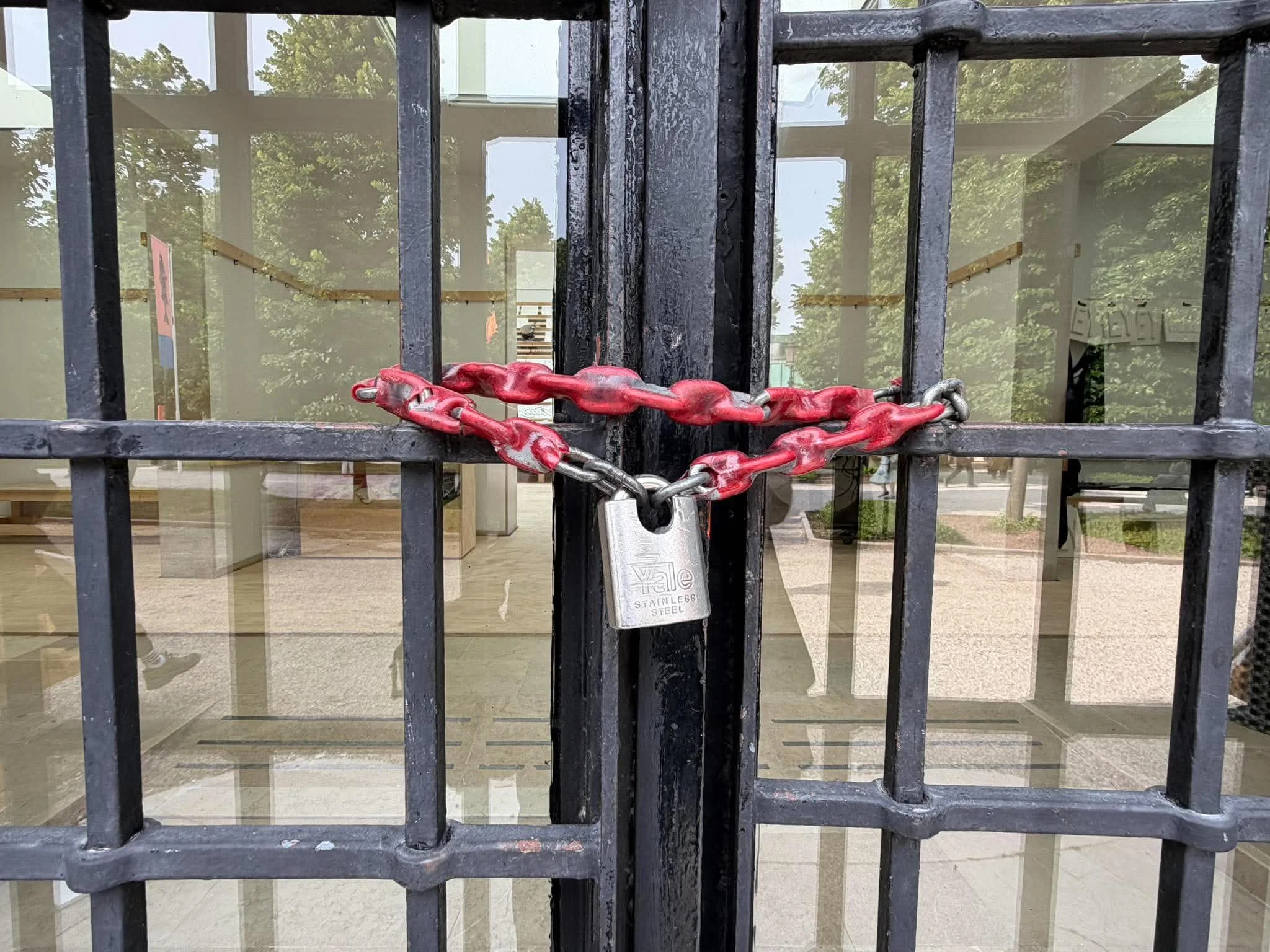
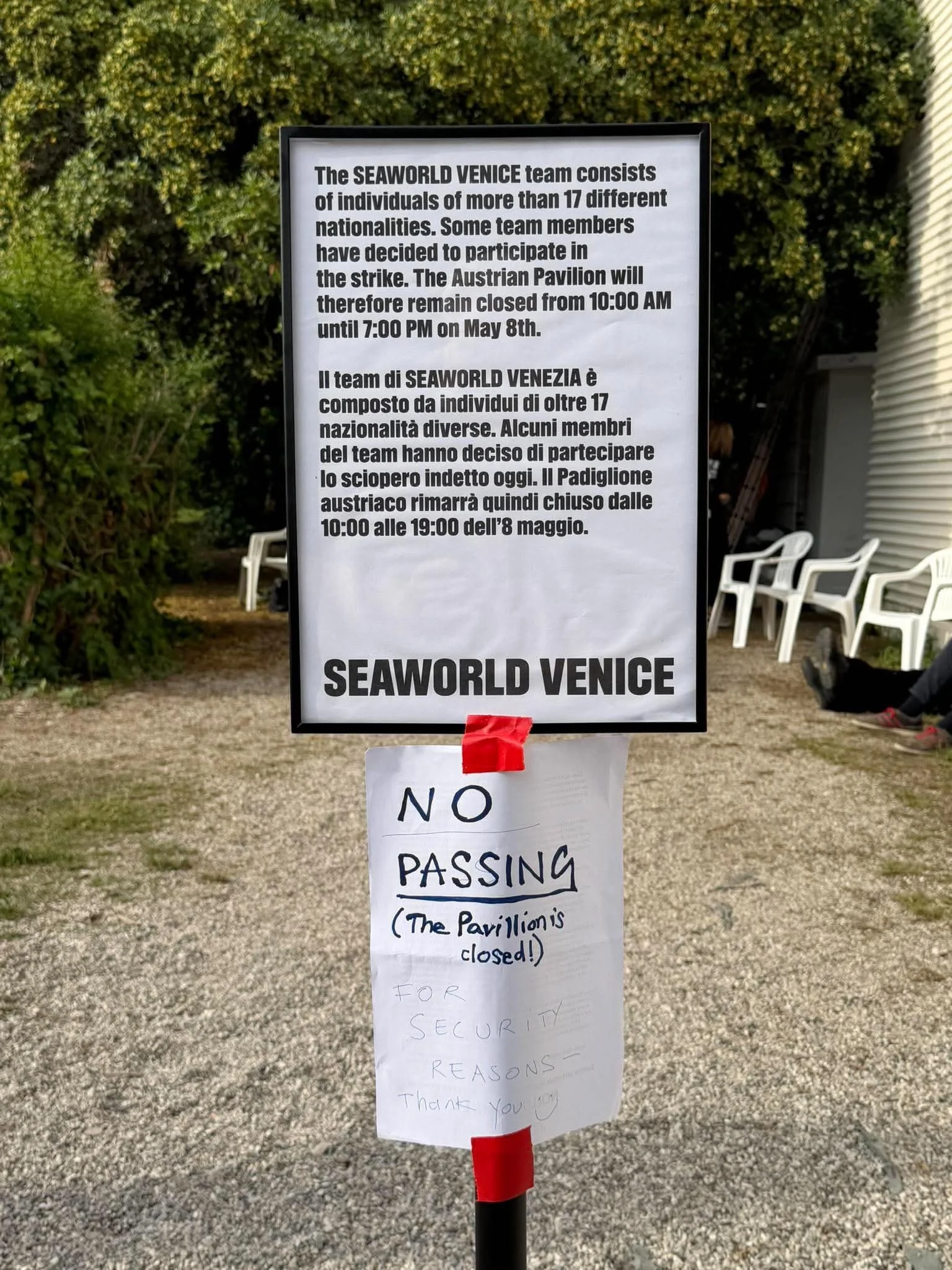
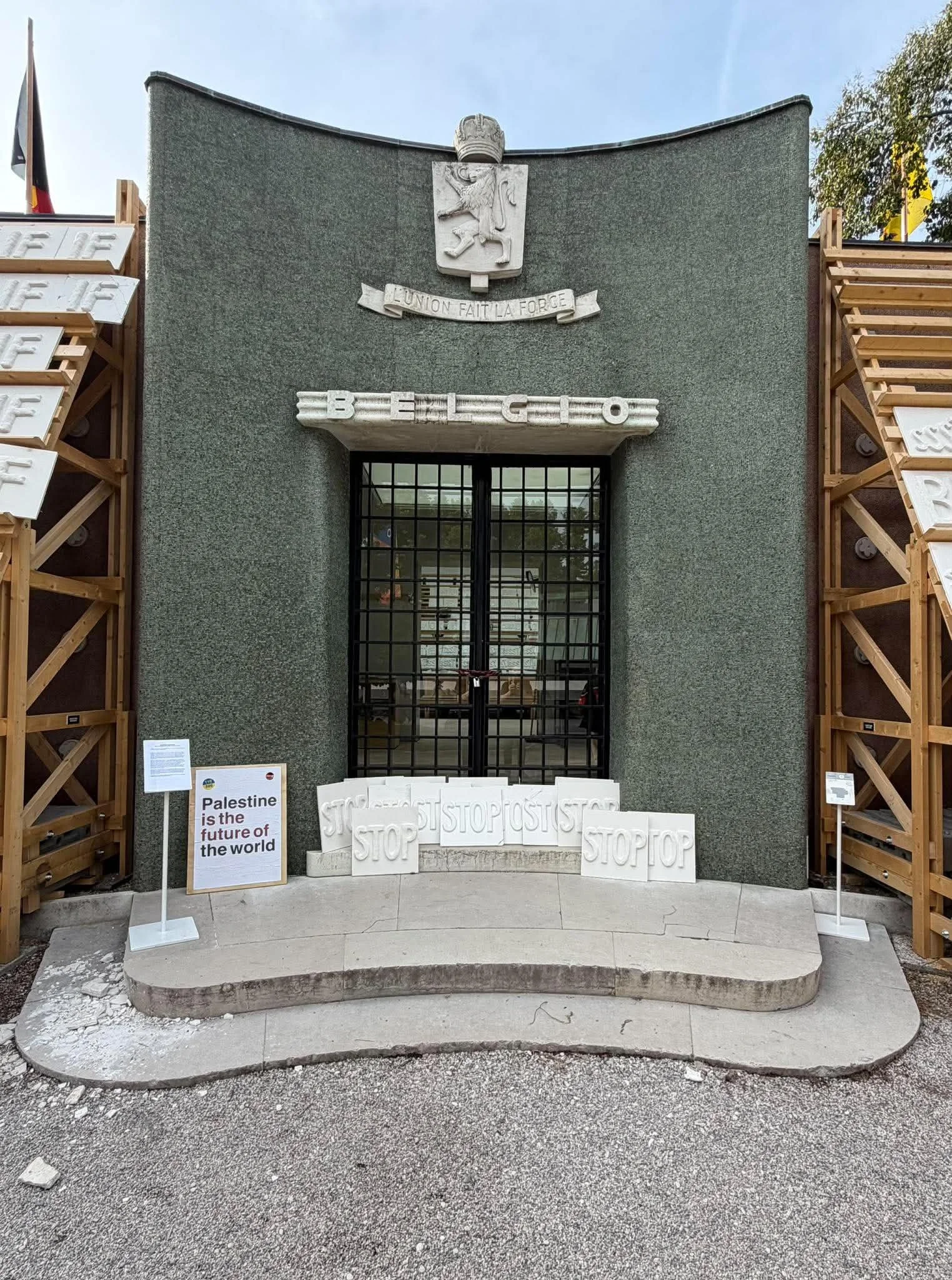
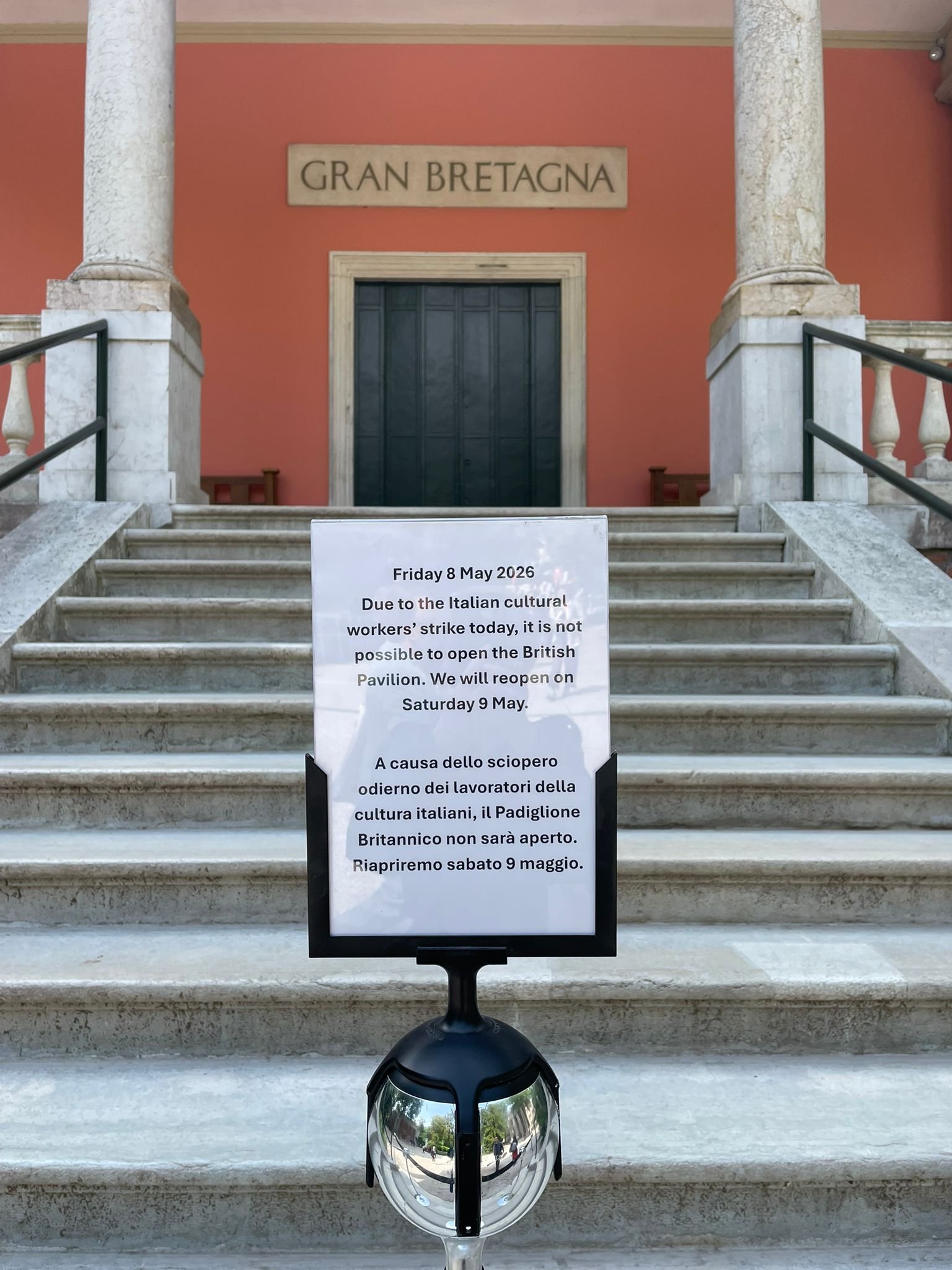
Protests also took place outside Israel’s exhibition. During the opening days, at the time of writing, 27 national pavilions have closed fully or partially in solidarity with the protests against Israel’s participation. A larger march for a free Palestine also led to clashes with police.
Pasolini Watches Us
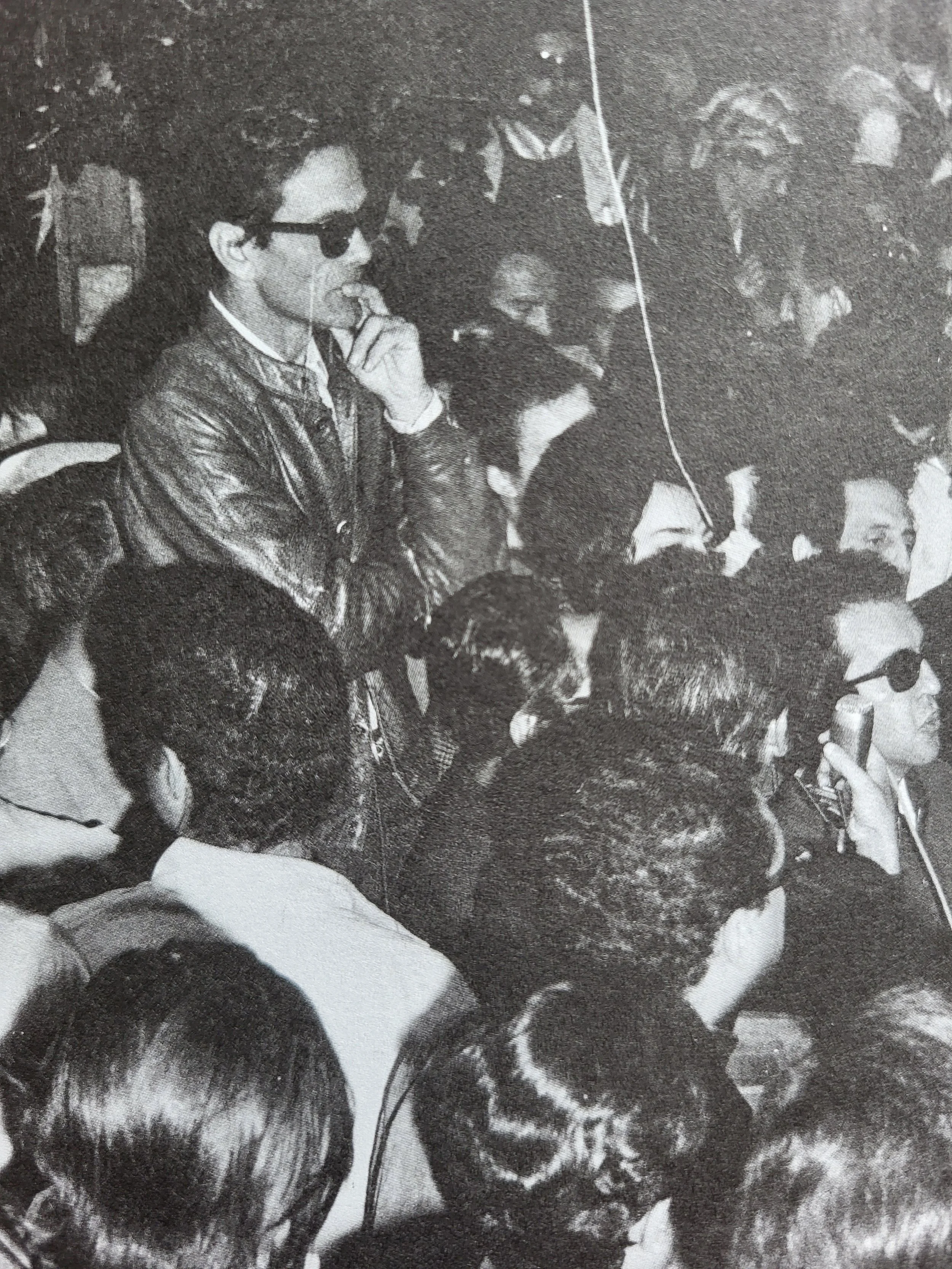
Pier Paolo Pasolini in campo Santa Margherita during the protest 1968
And yet this is far from the 34th Venice Biennale in 1968, or from the unnumbered Biennale of 1974, which broke with the usual pavilion logic and devoted the entire edition to Chile after the military coup, through a series of anti-fascist and solidarity-based manifestations. The 1968 Biennale came to be known as the “Police Biennale”, due to the recurring clashes between police and protesting students. It was not only a general protest against the Biennale as a bourgeois and capitalist apparatus. There were also protests against South Africa’s pavilion, which was accused of using Black artists to legitimize apartheid. Then, as now, there were also protests against the official prizes. Armed police were called in to protect the pavilions, and during the press days many people, including art critics, were beaten with batons and arrested.
This led to an internal strike: pavilions chose to close their doors in protest against the Biennale, artists turned their works to face the wall, and it became clear that the pavilions were not neutral rooms. The Biennale no longer appeared as a neutral place where art was shown, but as an apparatus that had to be defended. Its structure was laid bare. The protests led to the suspension of the international prizes, until they were reintroduced in 1986, and sales from the exhibitions were prohibited. South Africa’s pavilion was closed, and between 1968 and 1993 the country was excluded from the Biennale. In 1973 a new statute was also introduced, in which the institution’s task of prioritizing democratic, multidisciplinary culture over market forces was written in. The protests had a structural impact. At least for a time.
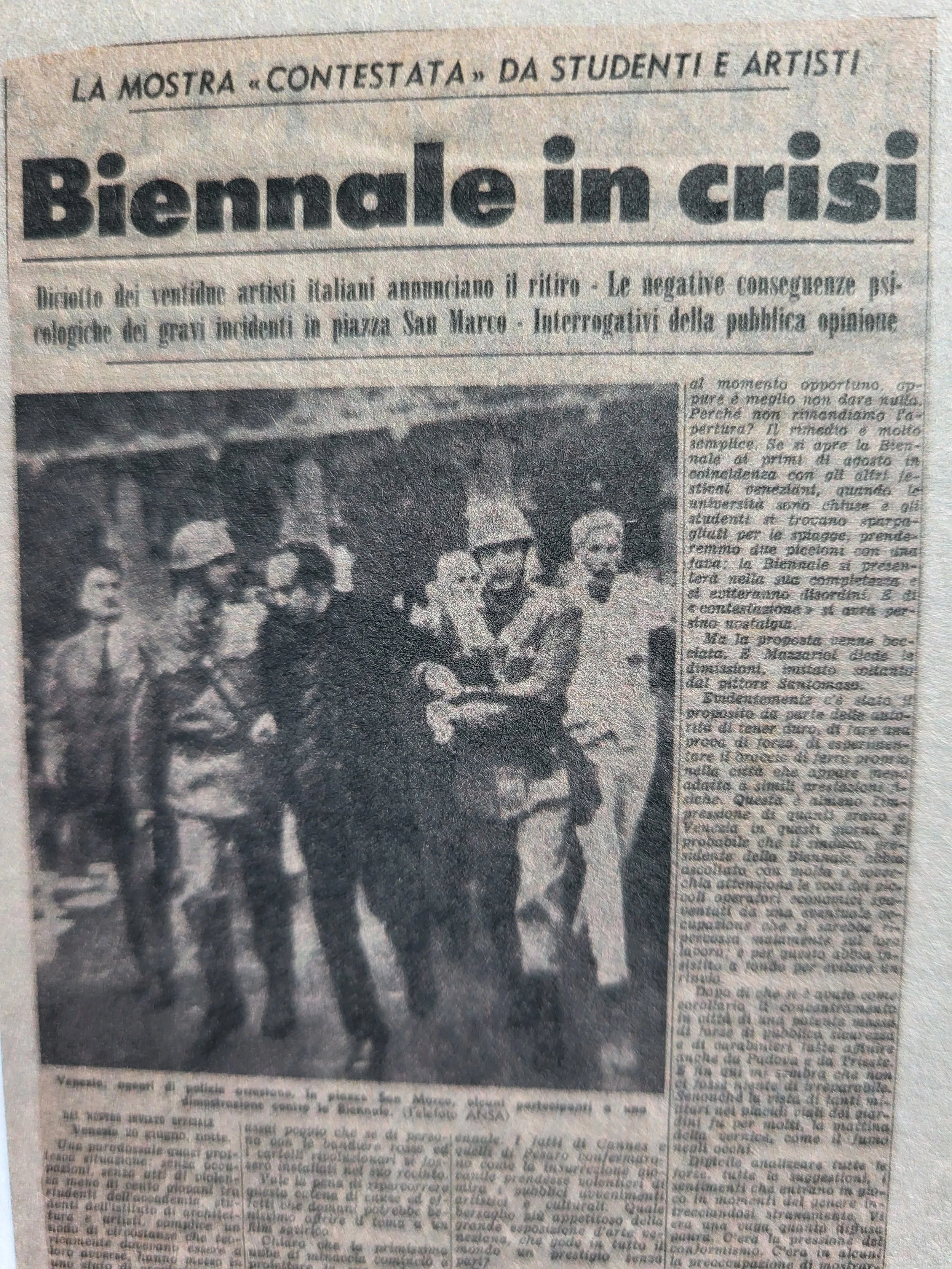
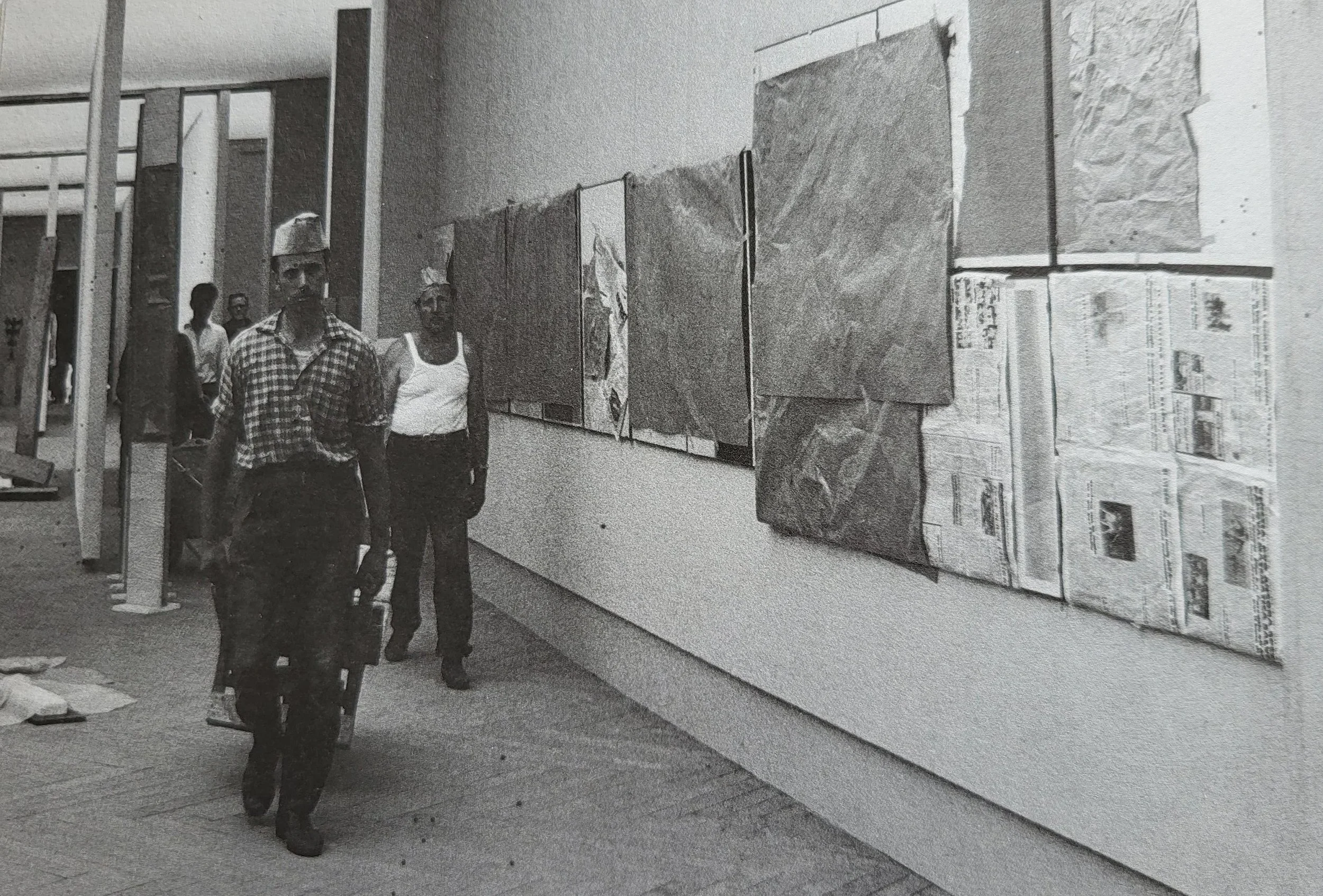
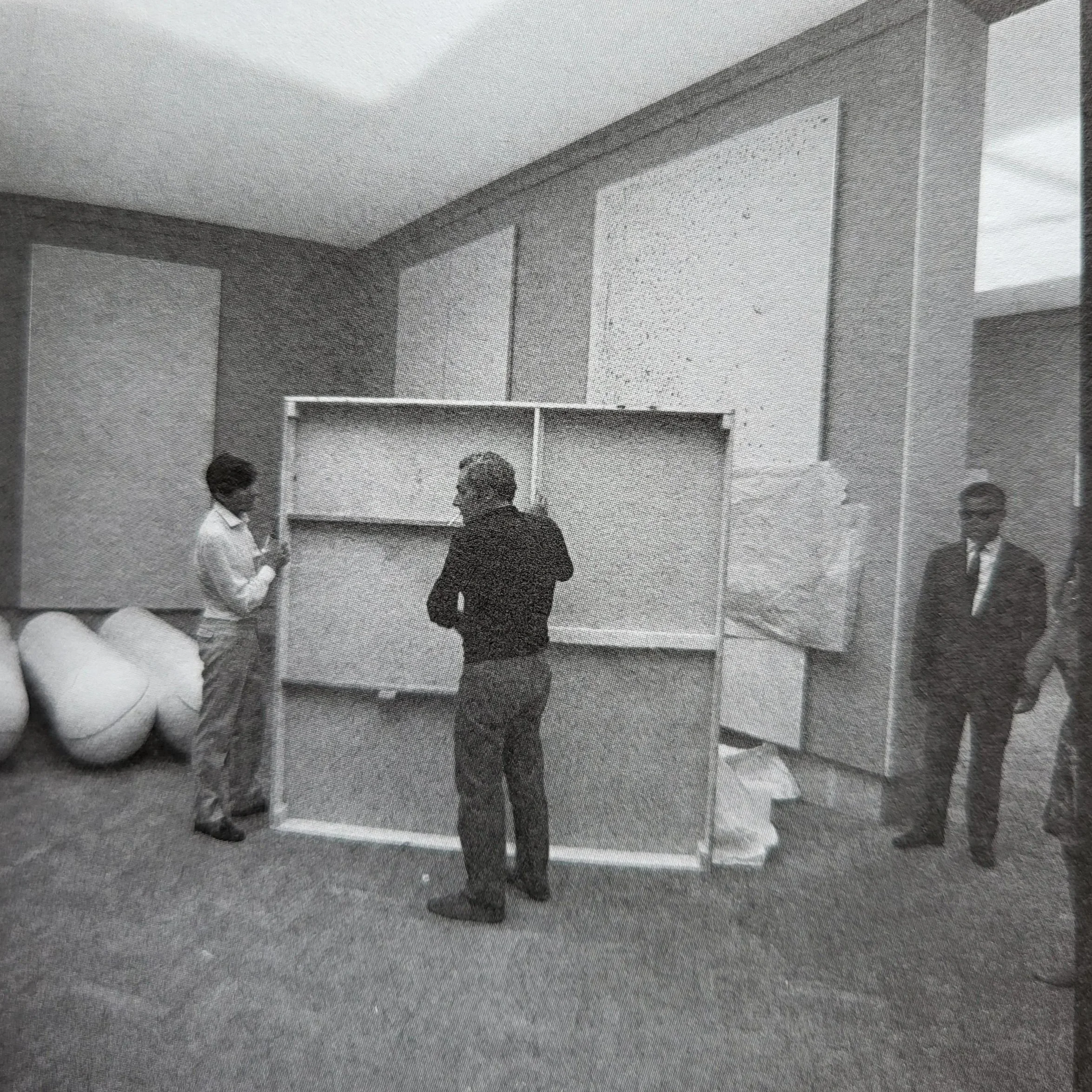
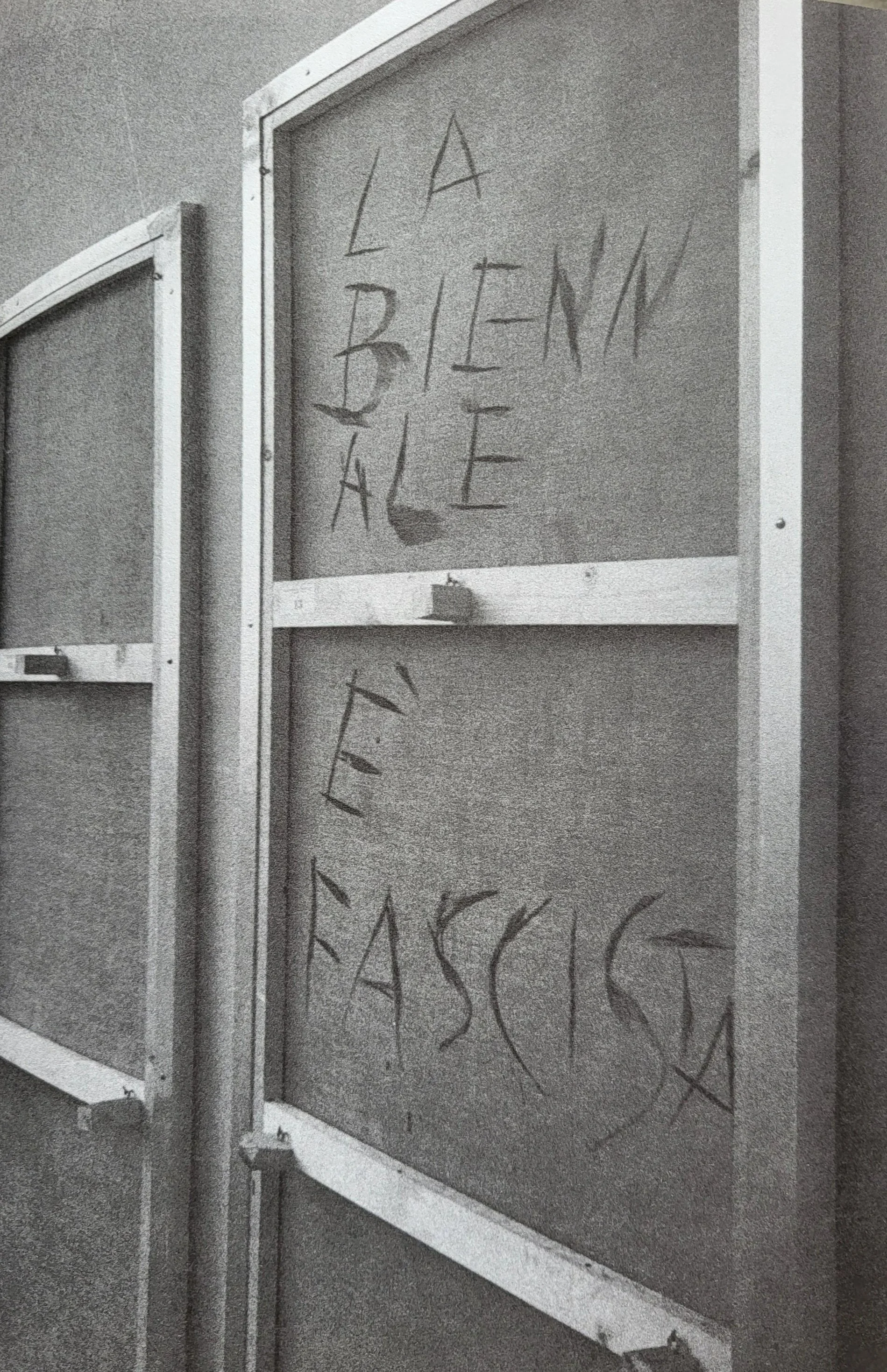
Impressions from the main exhibition 1968, with artists protesting by hiding their art works and turning the paintings around.
An Absent Reform
The 56th Venice Biennale, All the World’s Futures, curated by the late Okwui Enwezor in 2015, looked back to precisely this period and discussed fascism, Nazism, capitalism and perhaps above all the rise, fall, unions and dissolutions of nation-states. Former Yugoslavia, the Soviet Union, the union between Egypt and Syria and Czechoslovakia can be mentioned as examples of state formations whose altered geopolitical status also left traces in the Biennale’s pavilion structure. By then, Russia had already annexed Crimea. But Enwezor identified capitalism, “the great drama of our age”, and neoliberalism as that which overshadowed all conflicts, and as the target of his concept, through a look back at the changes in the pavilions over the years and a reading of the problems of 2015 through the 1974 Biennale.
Enwezor wanted to make a concerted effort to change the structure from within. How, one may leave unsaid, since nothing was really changed — structurally — through the reading aloud of Marx’s Capital in the exhibition. Since then, through the Biennales of 2017, 2019, 2022 and 2024, no major structural change has taken place. Rather, the development today appears as a regression. The protest action outside the Israeli and US pavilions in 2024, organized by ANGA, then appeared as an anomaly among the champagne glasses. In 2026, this anomaly has become harder to dismiss.
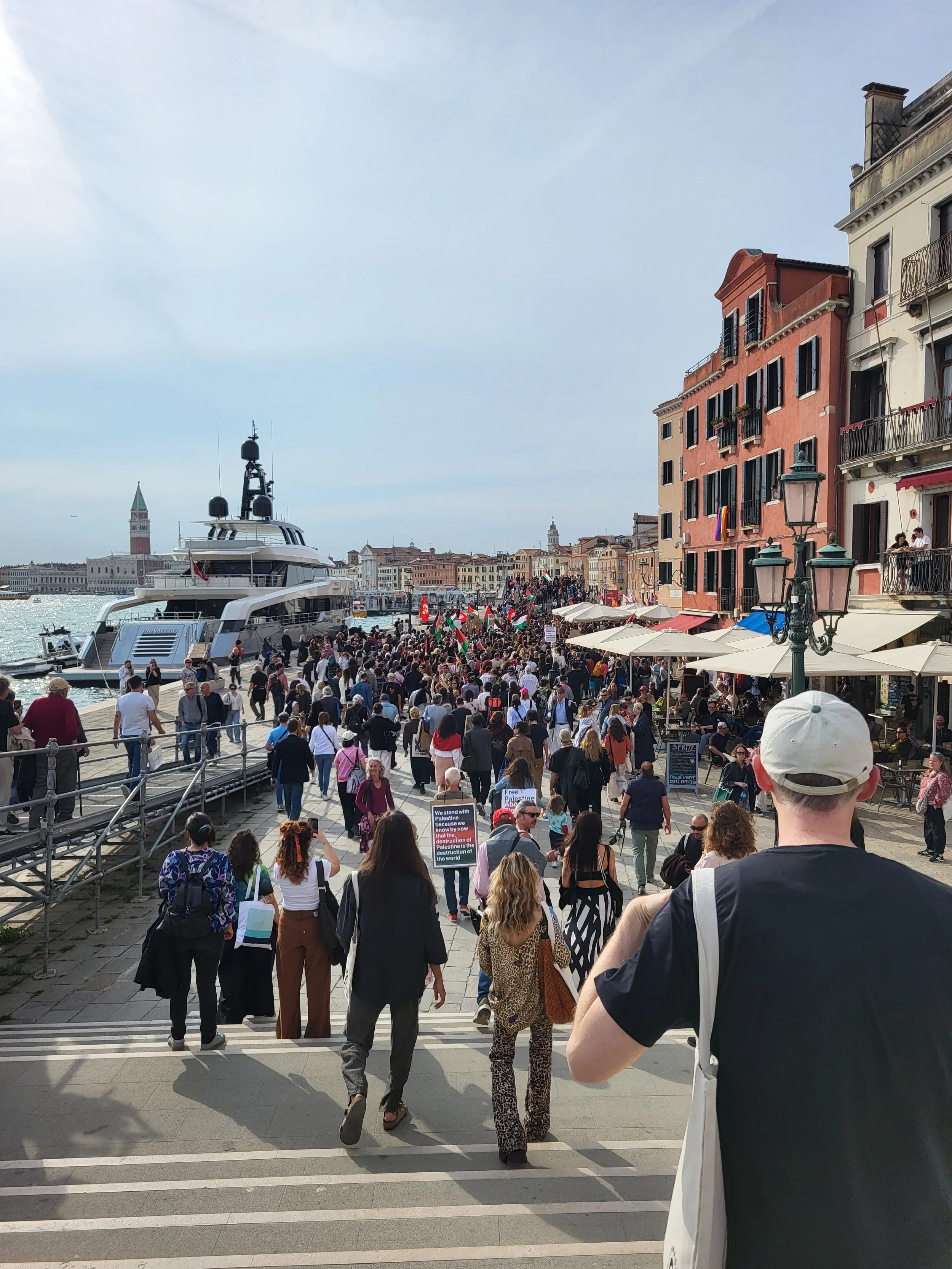
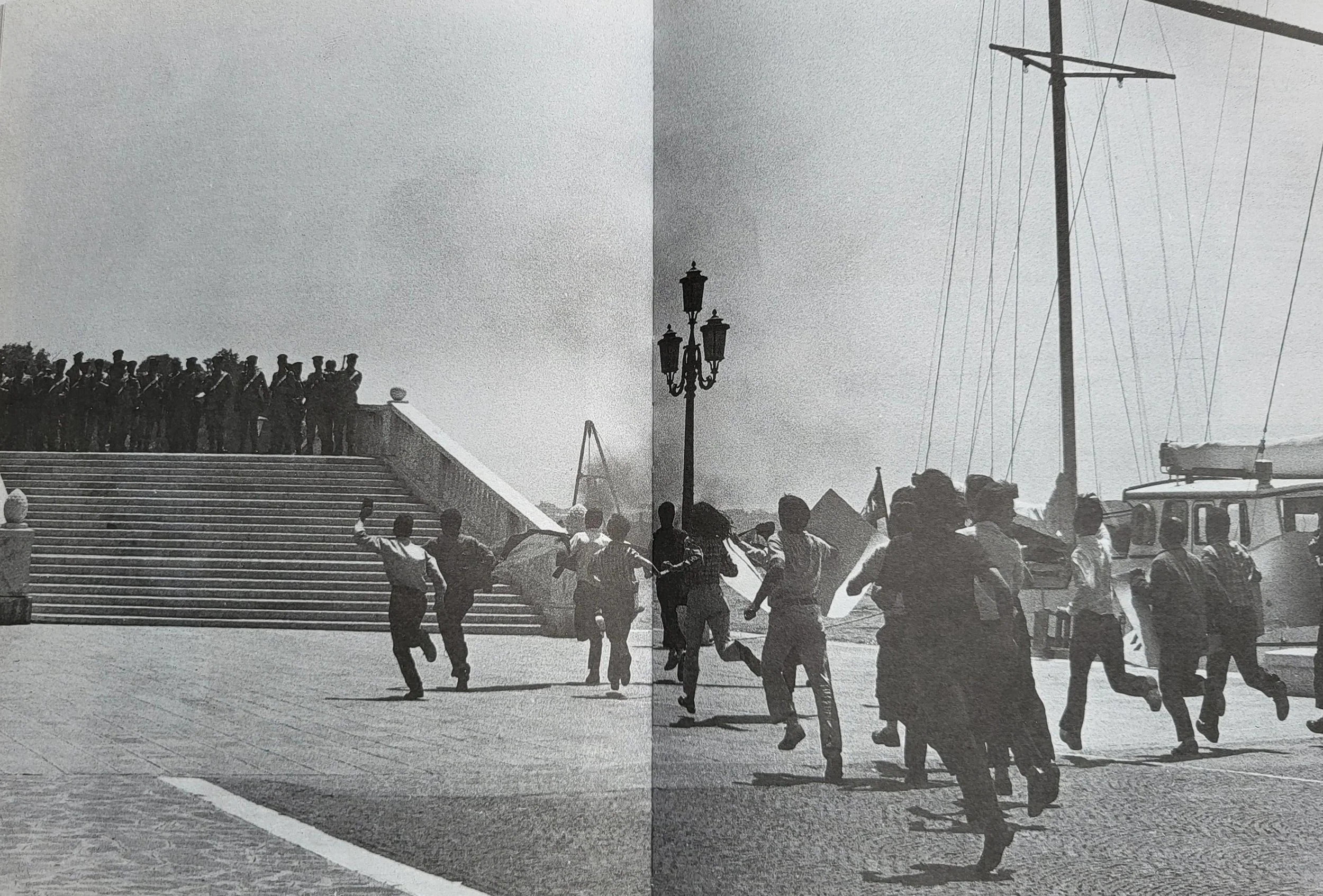
The protests in 1968 and in 2024 at the same bridge close to Giardini. Photo 2026: Power Ekroth
The protest actions organized by ANGA in 2026, partly outside Israel’s installation in the Arsenale and partly through a larger protest march with thousands of participants, had a significantly greater impact. What has really had an effect, however, is the pavilion strike and the collective decision by artists and pavilion teams to withdraw from prize consideration. More than 70 artists, roughly half of the participants, have withdrawn from prize consideration, as have 22 national pavilions. The question is no longer only how the Biennale can handle protests, but how it can survive when its own model of representation begins to strike against itself. This was also precisely what threatened to happen when even the ground staff threatened to strike — because if no one scans the VIP entrance or cleans the toilets, chaos will commence.
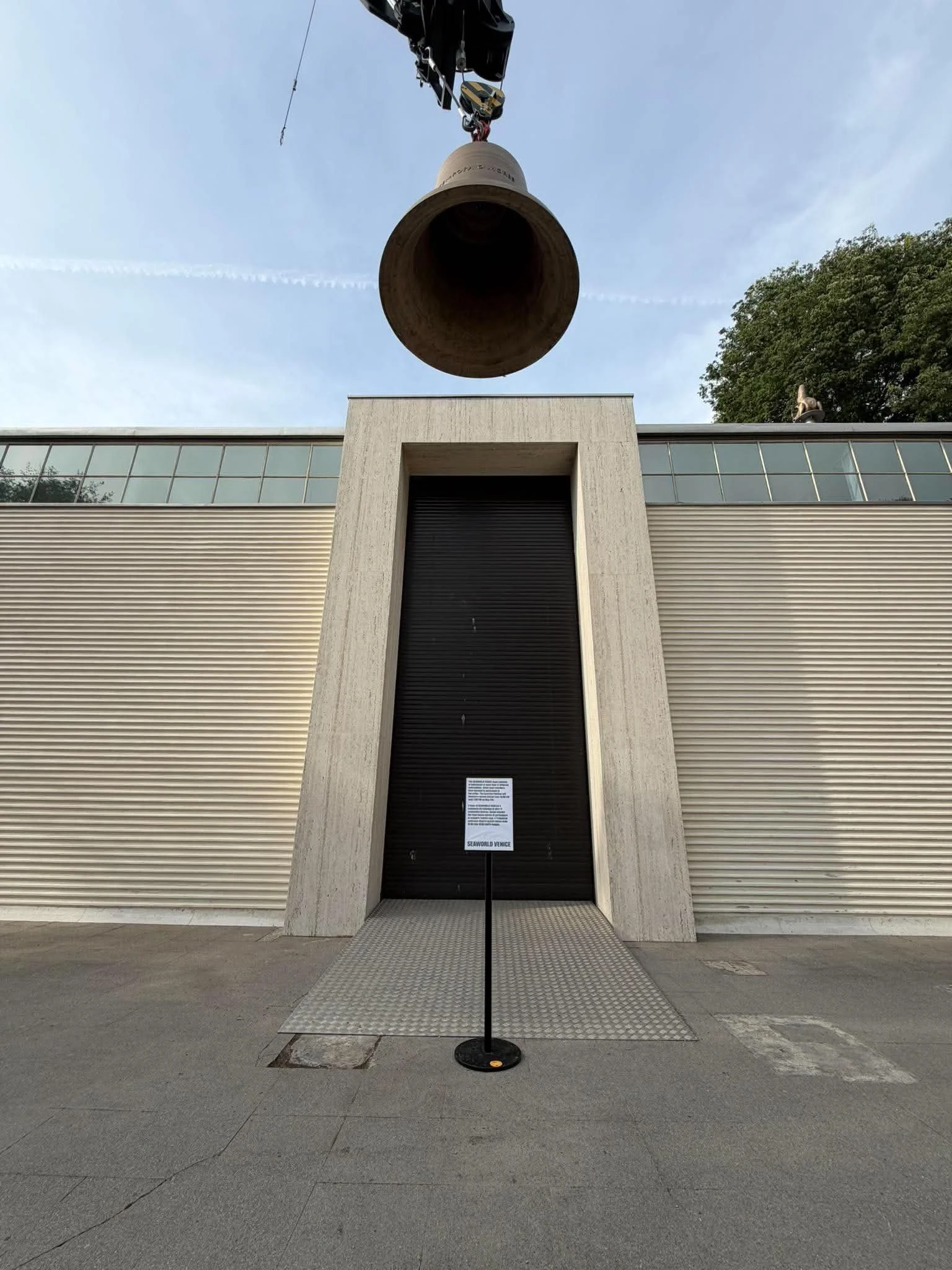
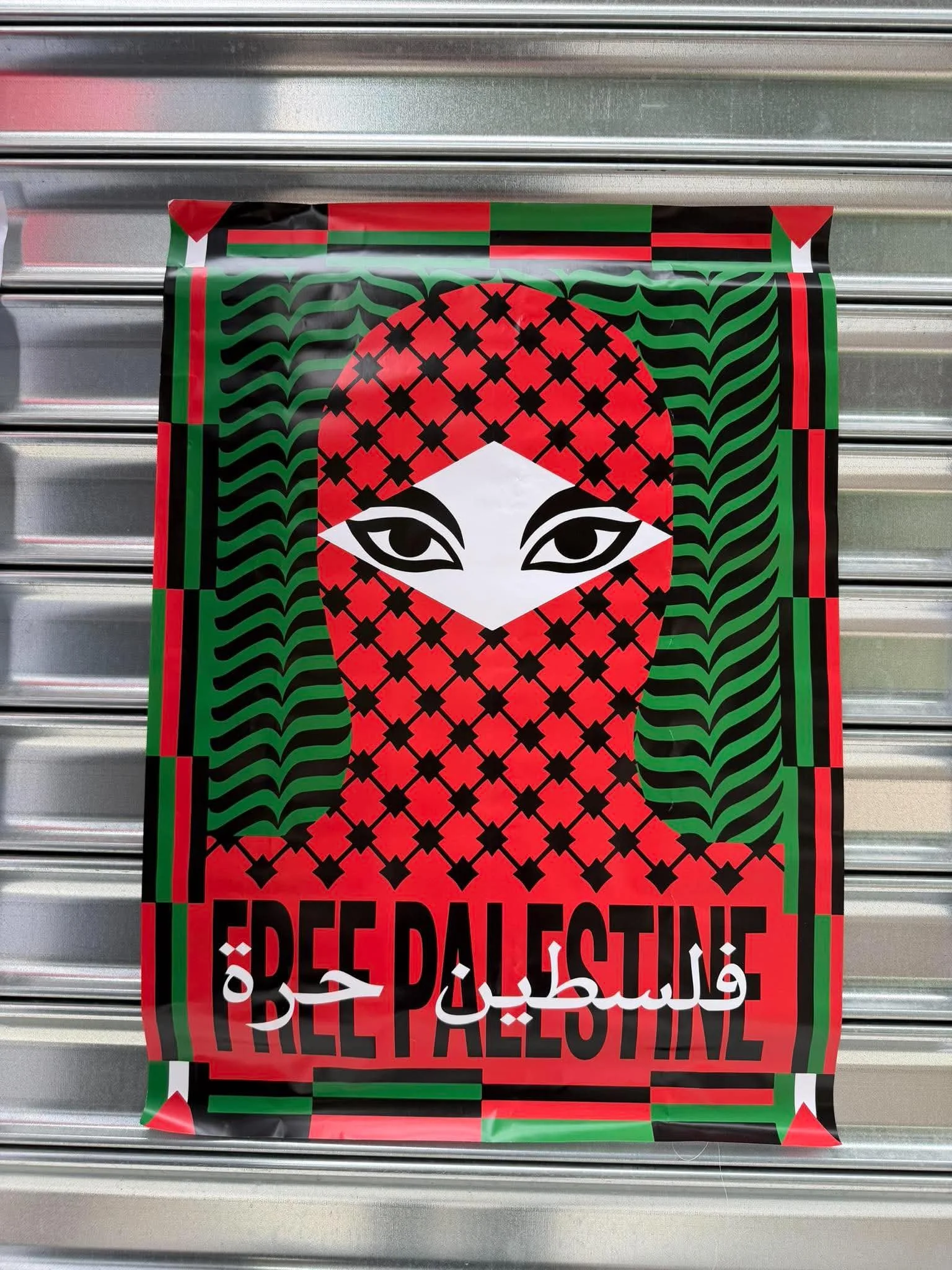
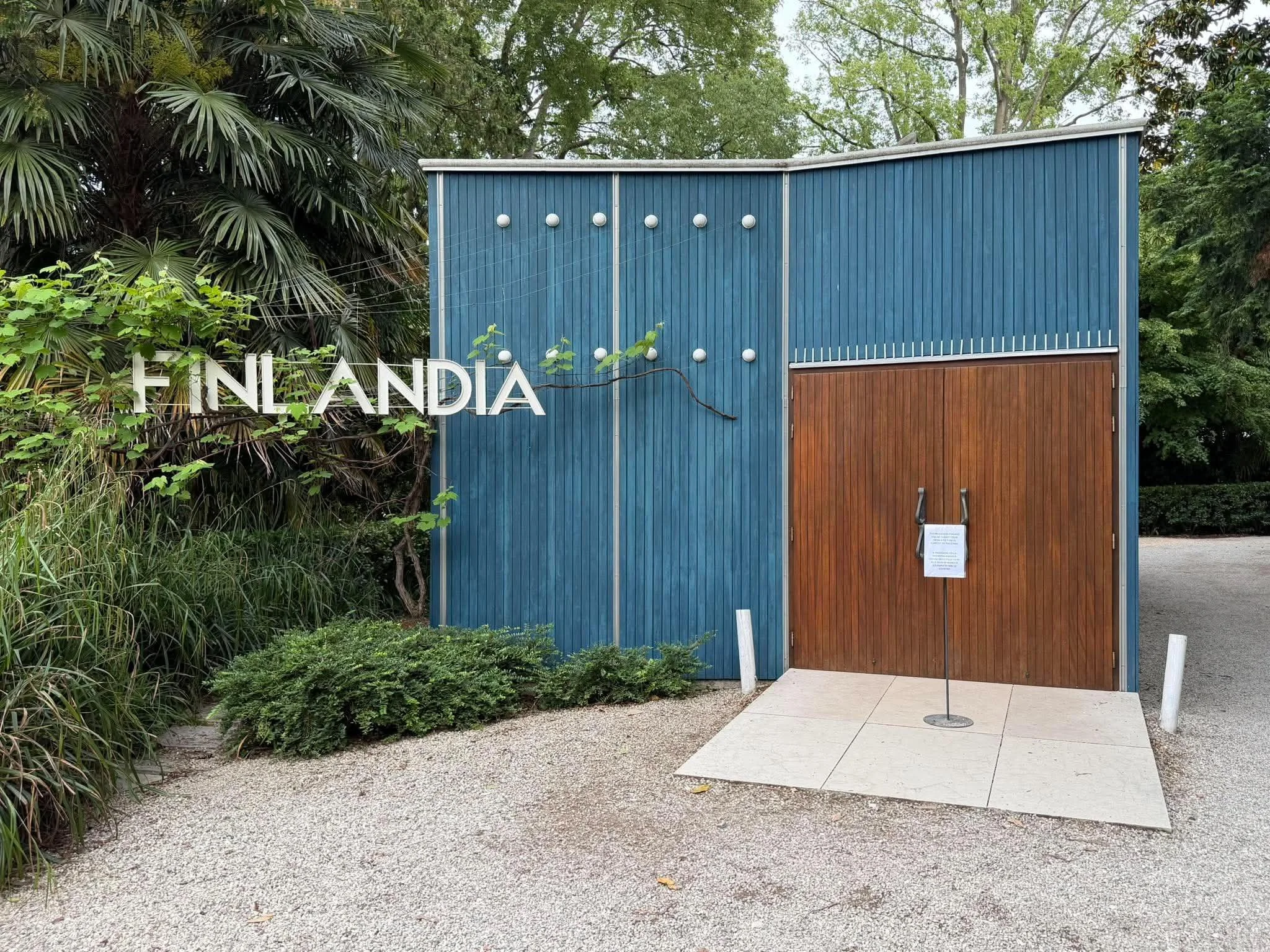
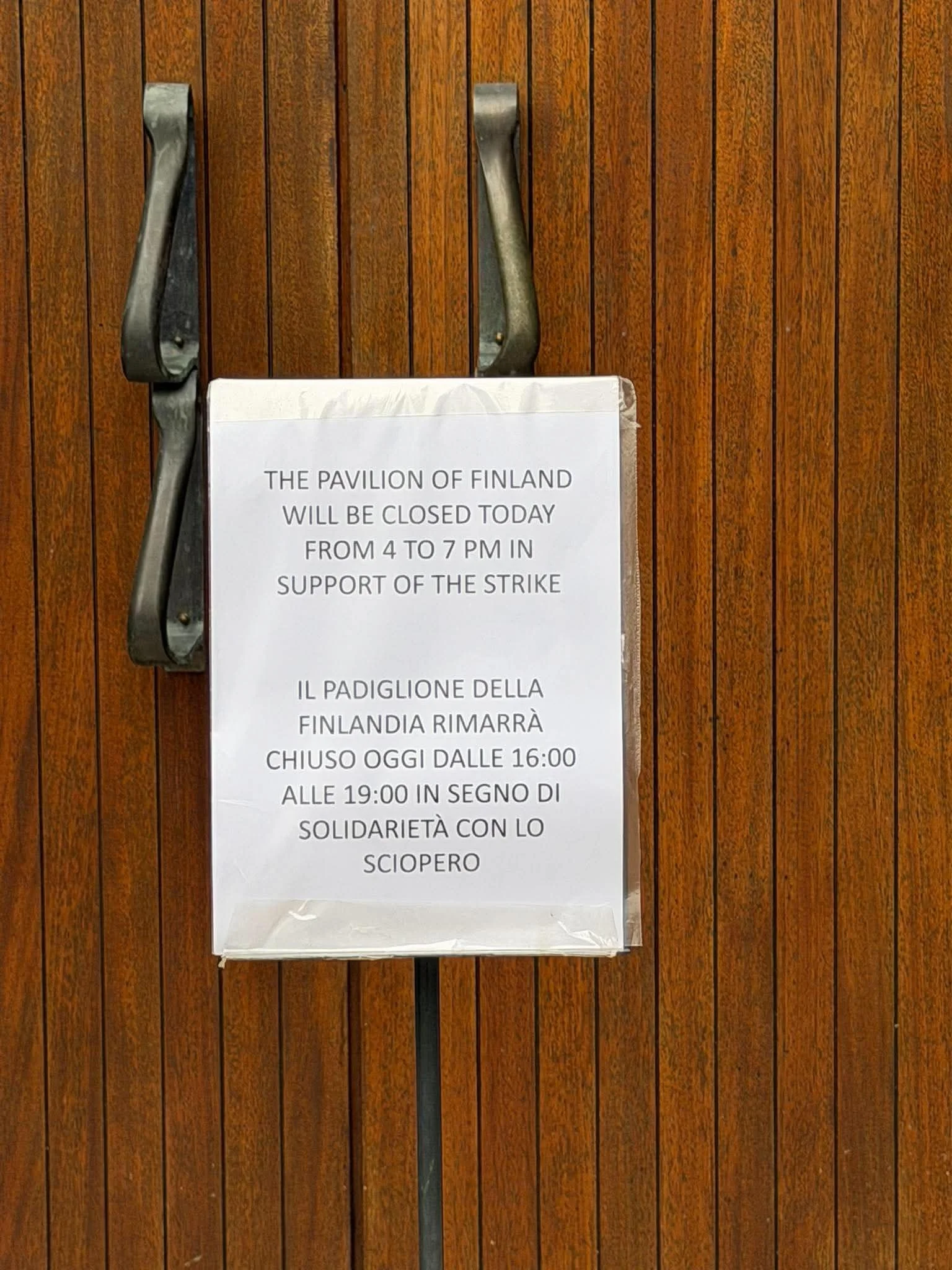
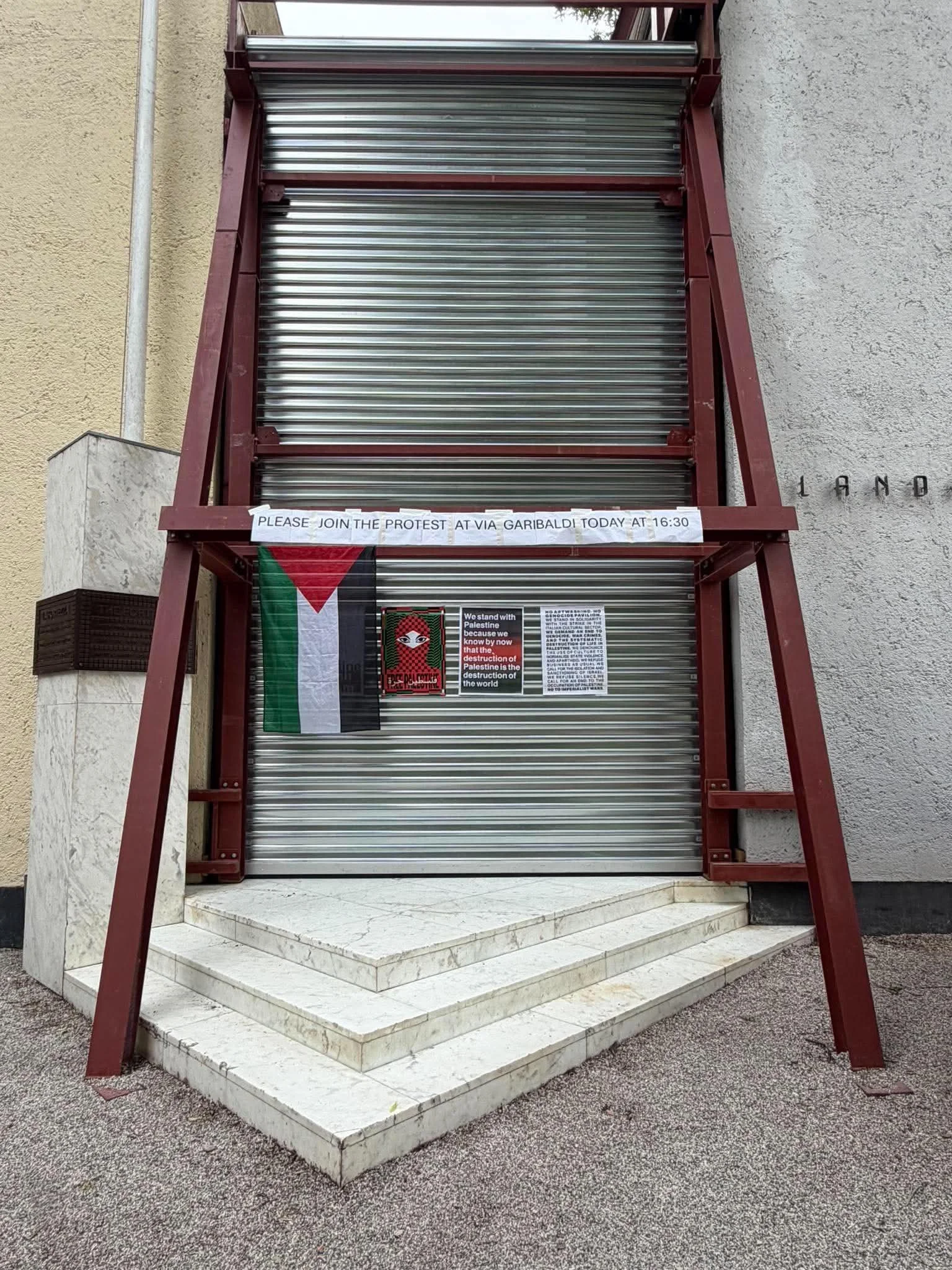
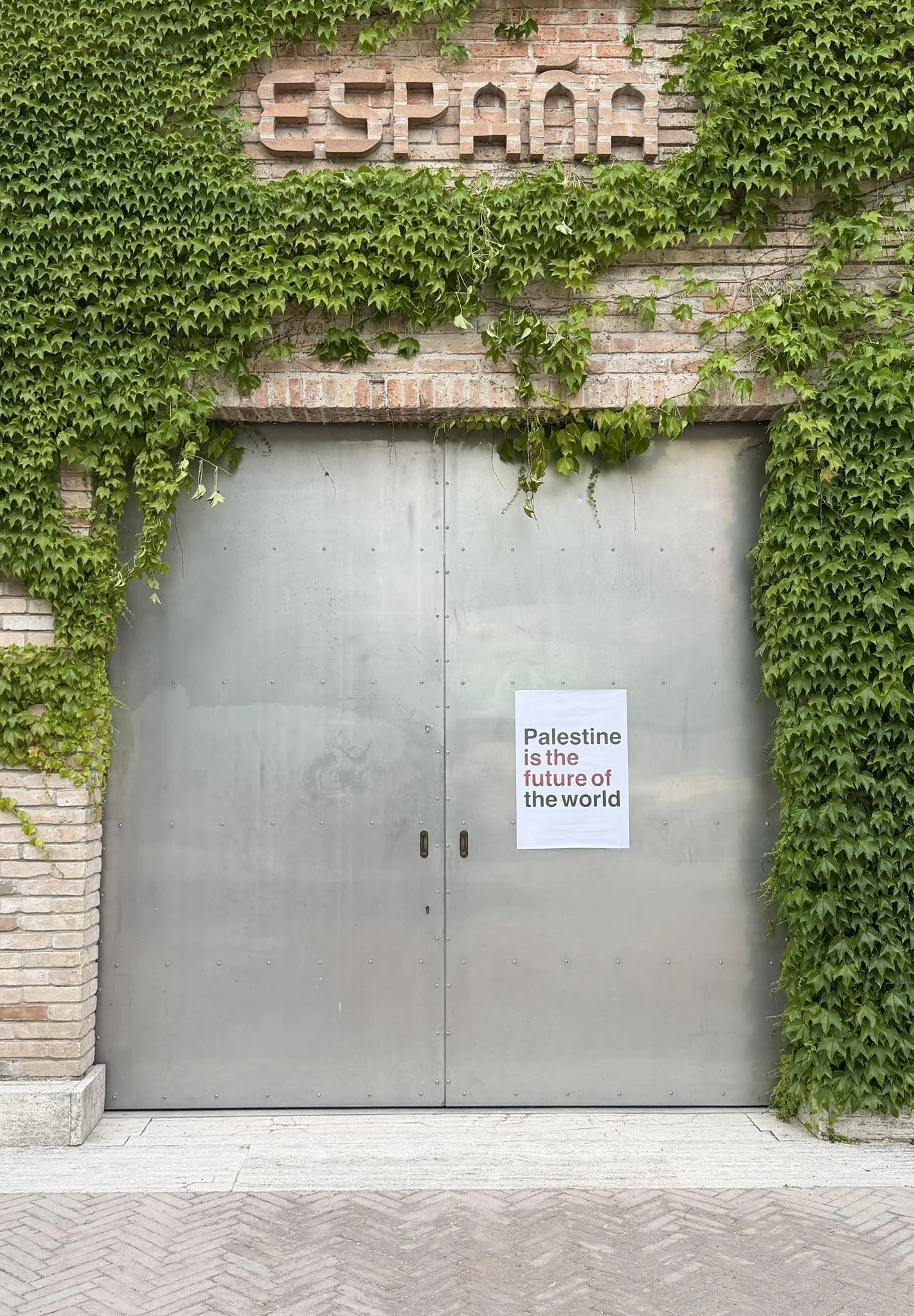
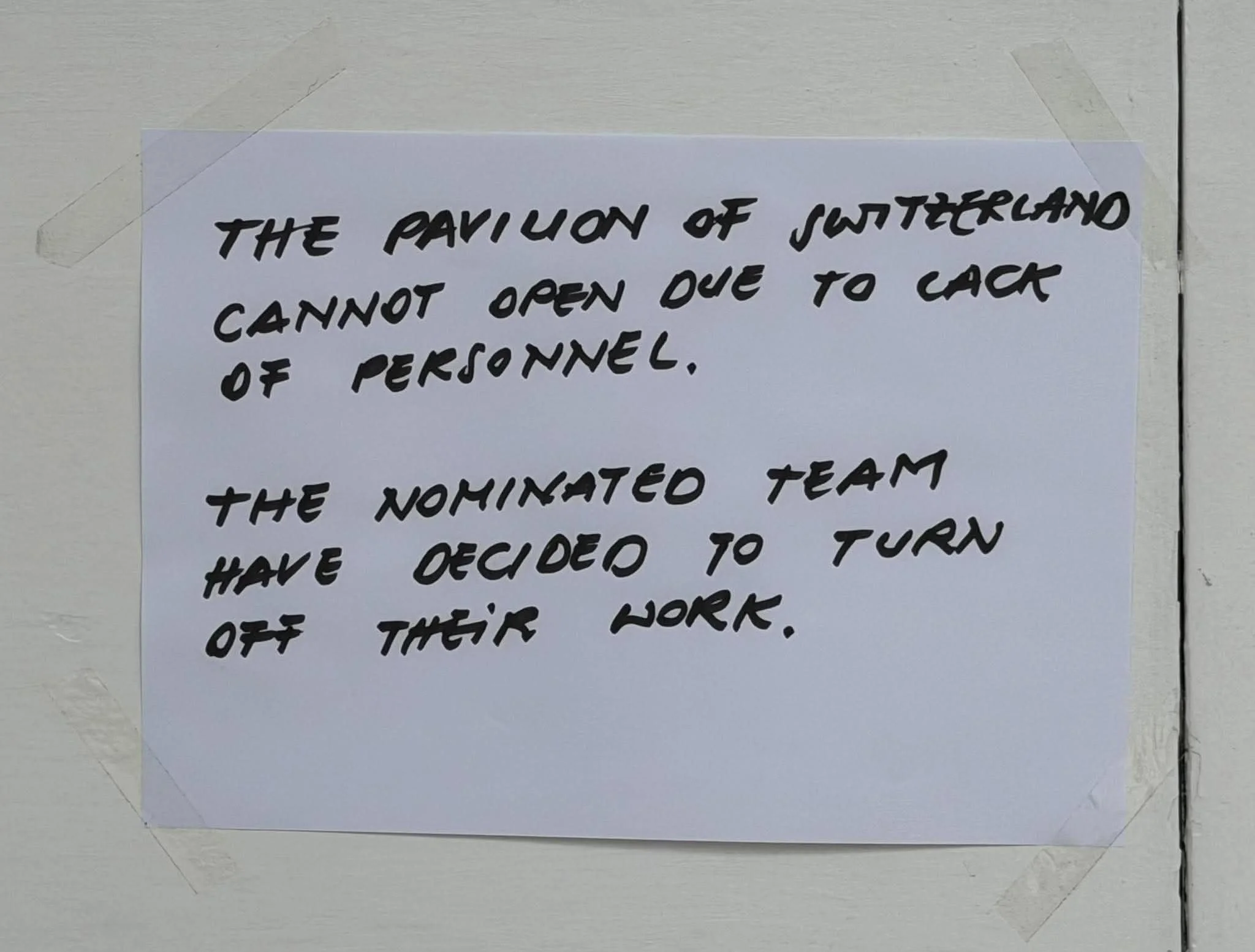
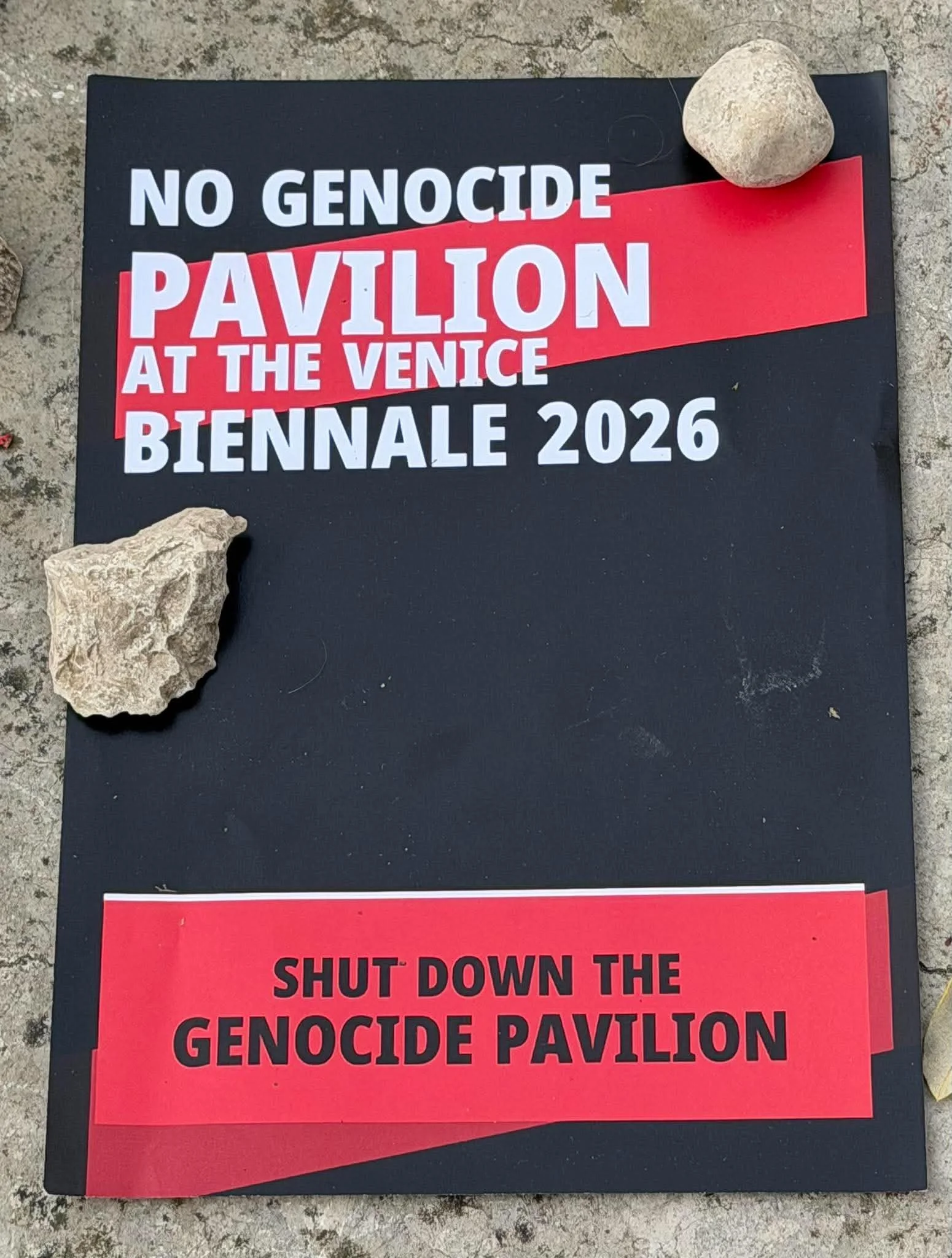
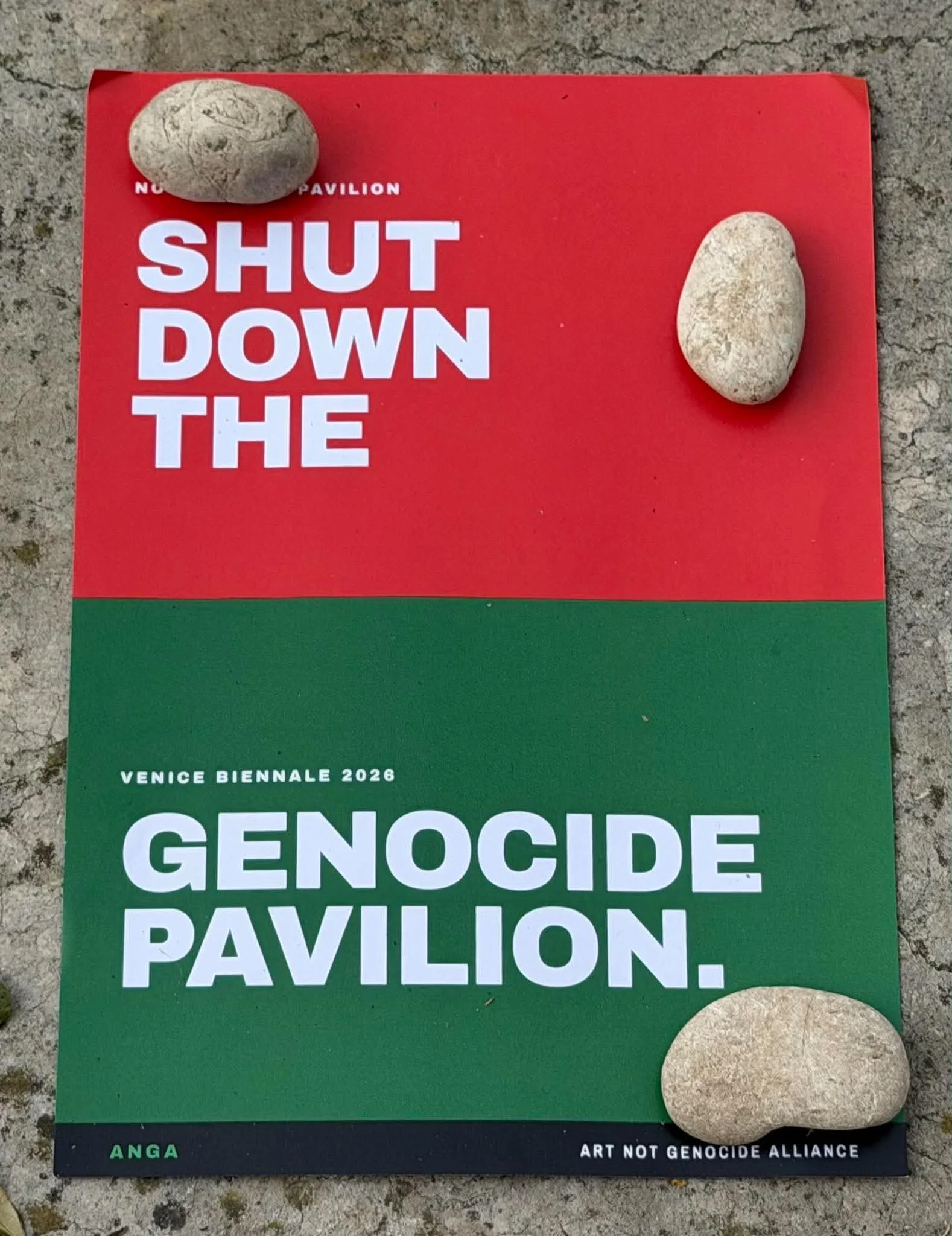
All images by Jan Watteus, except for the photo outside the British pavilion which is by Randi Thommessen.
The North is protected?
The Nordic Pavilion becomes particularly interesting to look at in this context. It already functions as a kind of umbrella and represents three different states, and should therefore be able to stand more freely in its interpretation of who or what can represent a nation. Yet here, too, the national logic returns. Each country invests money, and each country wants a return on its investment. Even where the pavilion seems to exceed the national model, its economic and symbolic ground conditions are thus reproduced.
In a year when the Biennale’s pavilion structure itself has become the object of strike, protest and refusal, an exhibition that turns toward Nordic mythology, the Kalevala and fairy-tale material does not appear as innocent escapism. Rather, it becomes a symptom of how easily the national pavilion can retreat into a safe cultural self-image.
Finland, which is also hosting the Nordic Pavilion this year, has nevertheless chosen to let this pavilion remain in prize consideration, even though Finland’s own pavilion, with curator Steffi Hessler and artist Jenna Sutela, has withdrawn. The Nordic Pavilion, with Tori Wrånes, Klara Kristalova and Benjamin Orlow, thus becomes not only an example of Nordic co-production, but also of the ambivalence that arises when several states share a pavilion but not necessarily a political position.
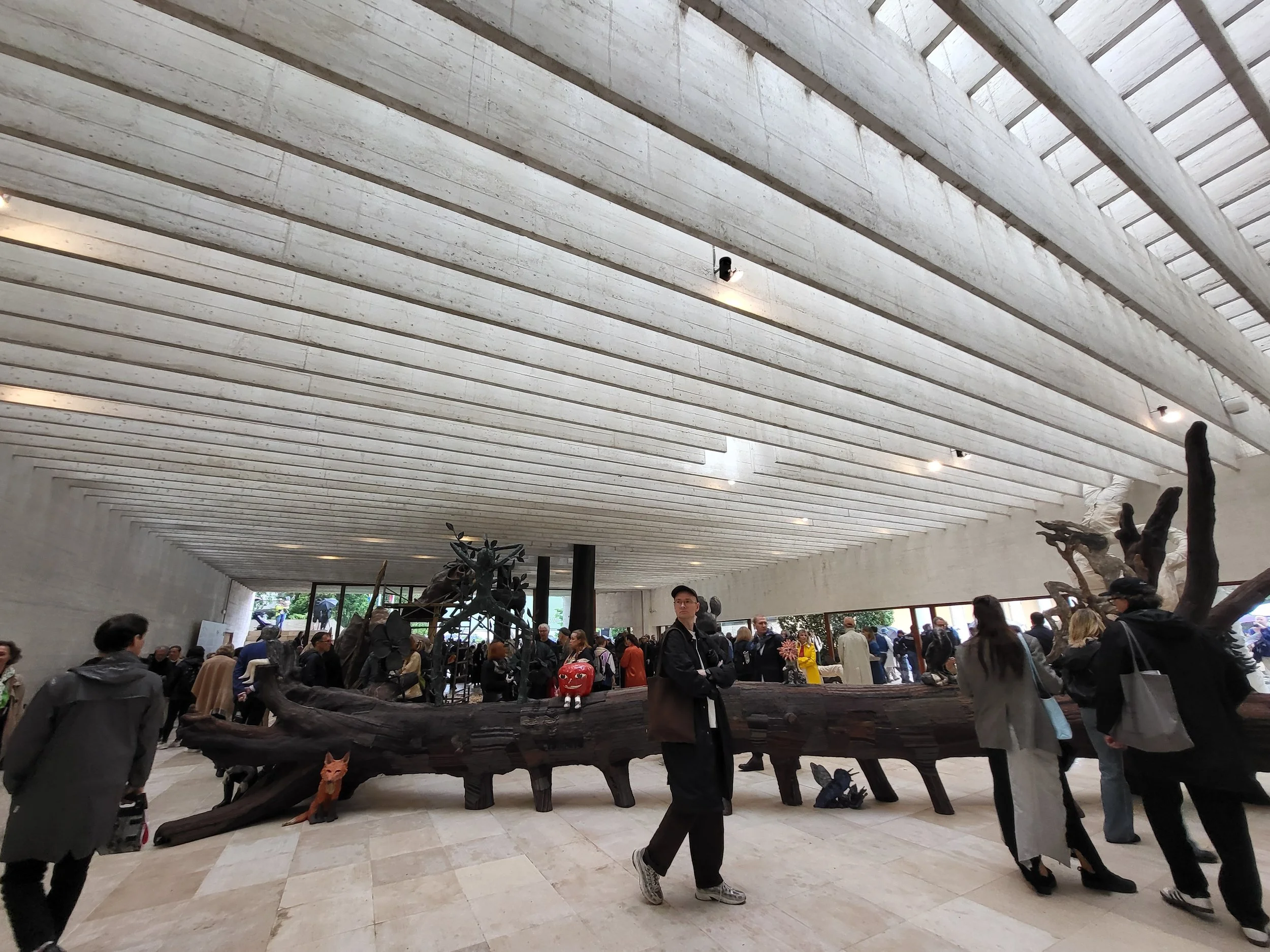
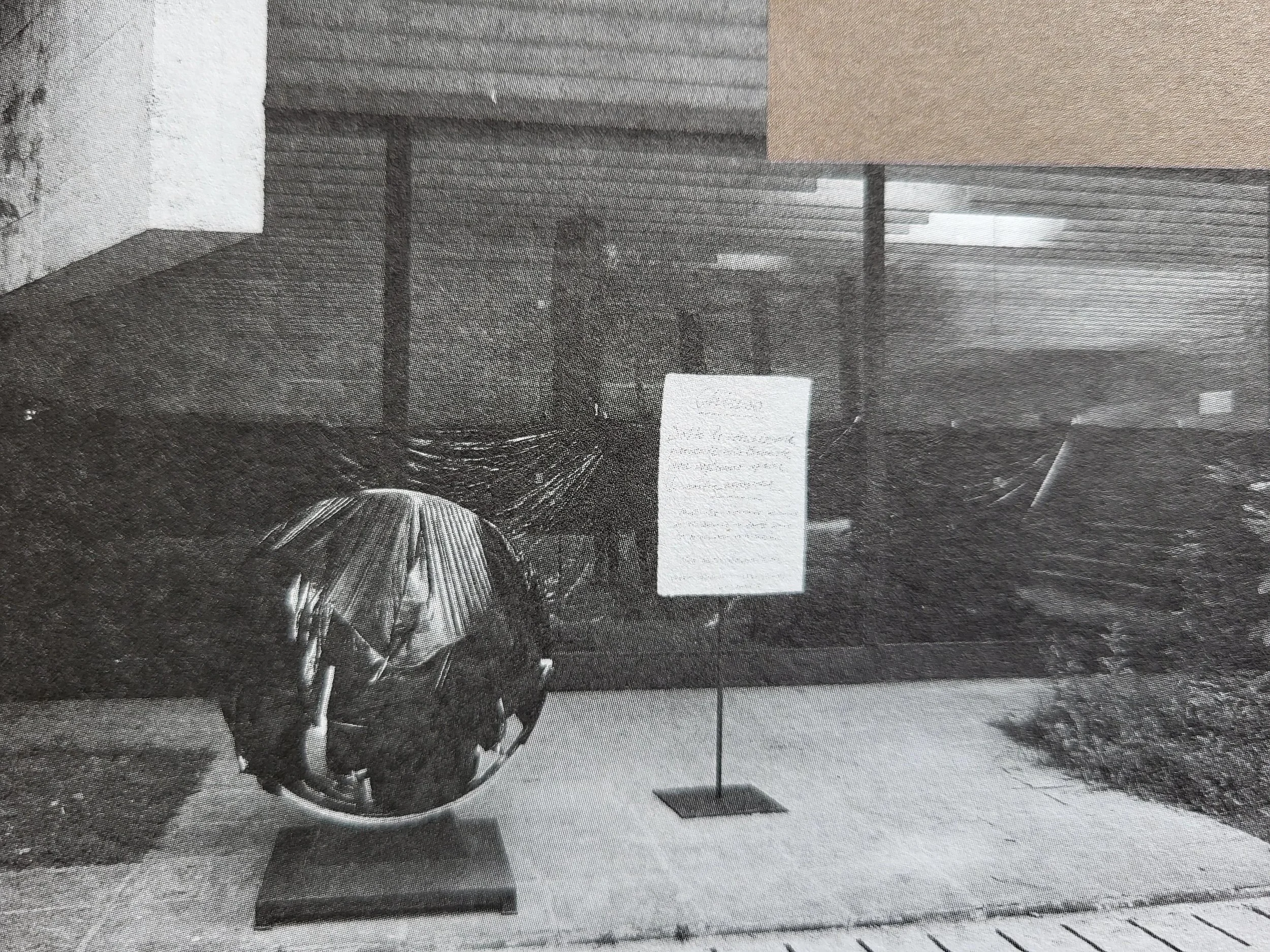
The Nordic Pavilion in 1968 and 2026.
The internal conflict zone, not only between nation and art, but also between different understandings of artistic responsibility, was evident already in 1968. Sweden’s contribution to the Nordic Pavilion at the 34th Biennale had been selected by Olle Granath and consisted of Arne Jones and Sivert Lindblom. All three chose to join the protests. They covered the Swedish section of the Nordic Pavilion with black plastic and refused to open it throughout the exhibition period.
The Finnish representatives Mauno Hartman, Kimmo Kaivanto and Ahti Lavonen, as well as the Norwegian artist Gunnar S. Gundersen, chose to keep their part of the exhibition open.
This created a strange visual contrast inside Sverre Fehn’s open pavilion architecture. It exposed a fissure in the Nordic countries’ view of civil disobedience within culture, and recalls the divided lines of protest in 2026.
Wanda Nanibush writes in the catalogue text “Archipelago to Archipelago” about acting as an external advisor for the Nordic Pavilion in 2022:
“To think with Glissant inevitably collides with the Westphalian order of territorial states and its inability to account for internally colonised nations that have inherent sovereignty. This collision plays out in the Biennale Arte. In the Biennale Arte 2022, I was one of two external advisors on the Nordic Countries Pavilion. The three invited participants, The Sámi artists Pauliina Feodoroff, Máret Ánne Sara and Anders Sunna, wanted to formally rename the pavilion the Sámi Pavilion; however, the National Participation could not be formally renamed due to official reasons, as Sámi Indigenous land is not recognised as an independent country by the Italian State. The episode exemplified how Indigenous nationhood is systematically denied in both law and language in the ‘West’.”
If the Biennale’s pavilion logic is based on the idea that culture can be sorted by flagpole, Glissant thinks in the opposite direction: identity as relation rather than root, as connection rather than national representation. This is also why the impossible renaming of the Sámi Pavilion in 2022 remains telling. It showed that the Biennale can allow another story, but not fully recognize its political form.
The inner dream of the nation-state still seems to revolve around territory, power, conquest and the right to exploit, incorporate and rule. Less around community, empathy, democracy and the equal right of all people to exist. The Biennale’s pavilions are therefore not merely rooms for representation, but places where the fantasies of the nation-state continue to be staged, even when the art inside them tries to say something else.
But if the nation-state as pavilion form ought to be retired, it is evidently still attractive. So attractive that Qatar, for the first time in 30 years, has been granted permission to build a permanent pavilion in the Giardini. The price tag was 50 million euros in donations to the city of Venice. Money still talks.
If 1968 made the Biennale’s glass container visible, 2026 shows that the container is no longer only transparent, but cracked. The question is no longer how art can be shown inside it, but whether art can force another form into being. The Biennale did not die. It learned to continue. The question is whether it can now be forced to continue with other terms.
For a Viva la Biennale! to be able to follow La Biennale è morta, it must therefore mean something other than the institution’s own survival. It must mean that art breaks apart the forms that keep it captive. Not the nation as form, not the institution as guarantor, but art as the motor for other ways of thinking community, conflict, responsibility and presence.
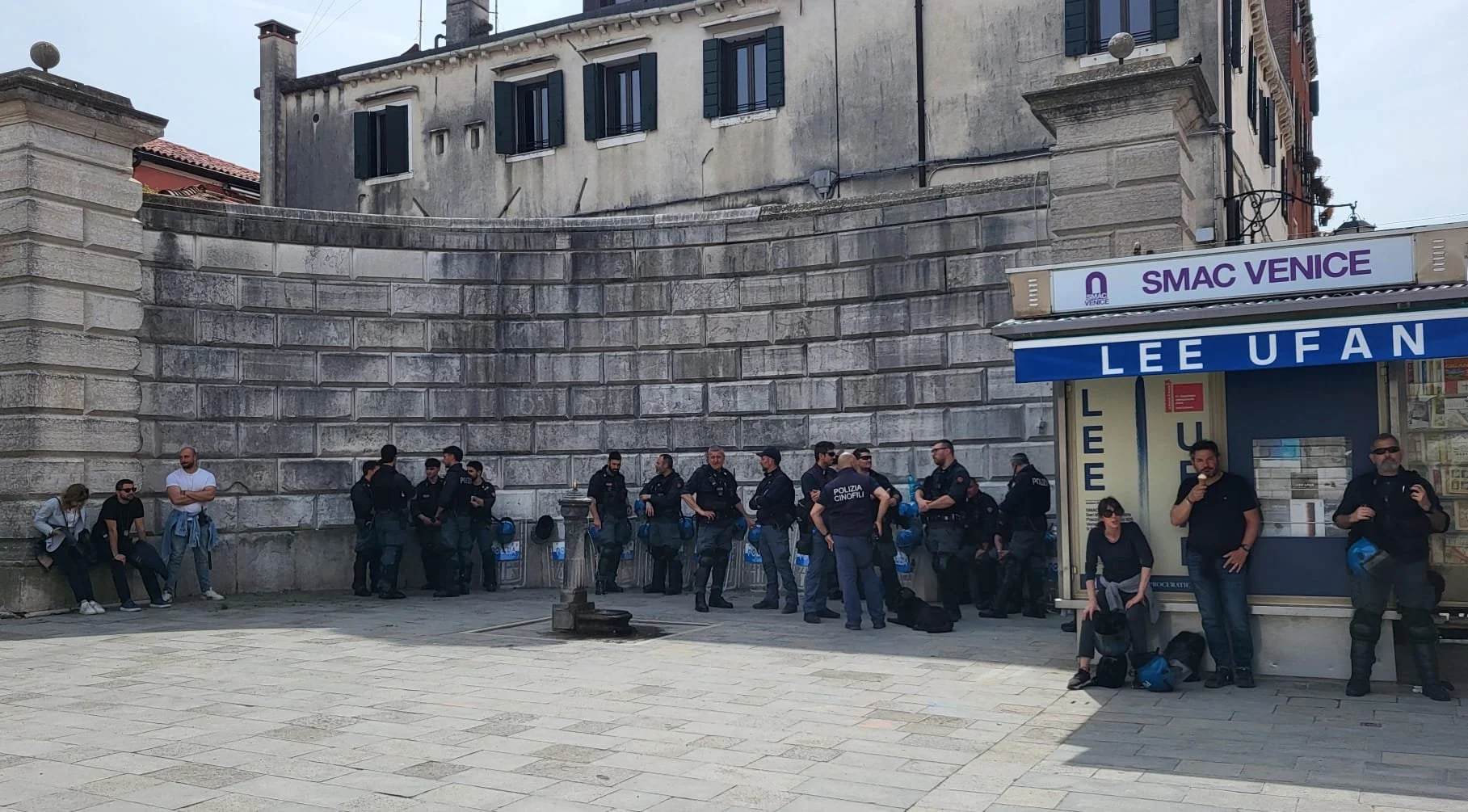
Riot police waiting for the demonstration at Via Garbialdi, 2026. Photo: Power Ekroth
La Biennale è morta
Efter att ha sett det mesta av Giardini och Arsenale blir man grinig och vill helst tränga bort allt genom att ta ännu en spritz, eller kanske långsamt kvida ”Tadzioooo” i längtan efter den ungdomliga energi som flytt. För den mest uppenbara gestalt som vandrat med oss förhandsbesökare genom biennalens trängsel, prång och paviljonger är ingen annan än döden själv.
Döden tar gestalt på många sätt. Kanske främst genom att biennalen själv vilar på den alltmer förlegade idén om nationalstater, allianser och pakter. Biennalens död har förklarats tidigare, också från ett nordiskt perspektiv. Mer om det senare.
Begravningen och kolumbariet
Att huvudcuratorn Koyo Kouoh dog ett år före öppningen är förstås latent närvarande. Inte bara i verk där hon avbildas som en fruktbarhetsgudinna inne i själva utställningen, eller i en gatumålning av henne i staden, utan också genom seansliknande performances, plaketter, fester och en allmän sorgeprocess som tycks genomsyra allt.
Många har velat jämföra konstvärlden med en religiös värld, där vi samlas i museet som i kyrkan eller moskén. Om man drar den liknelsen vidare blir Kouoh här närmast kanoniserad. Curatorer från alla läger, och till och med biennalens president Pietrangelo Buttafuoco, utsedd av Melonis regering, kan inte nog hylla henne. Det är inte sorgen i sig som skaver, men hur snabbt den blir ritualiserad och till institutionell betydelse.
Kouoh har i sin tur låtit inrätta två ”shrines” för två bortgångna konstnärer: Issa Samb, även känd som Joe Ouakam, från Dakar, och Beverly Buchanan, från USA. Sambs Laboratoire Agit’Art var en central nod för konstnärligt arbete, samtal och kollektivt tänkande, och det är svårt att inte se en resonans med Kouohs eget RAW Material Company: båda framstår som platser där samvaro och institutionell uppfinning flyter in i varandra.
Ordet ”kollektivitet” ekar överallt. Det gör det i helgedomarna, i hänvisningarna till Sambs Laboratoire Agit’Art och i den allmänna sorgeprocess som omger Kouohs frånvaro. Men det ekar också mer konfliktfyllt i biennalens institutionella struktur, där frågan om vilka kroppar, nationer och gemenskaper som får framträda snabbt blir omöjlig att skilja från frågan om vilka som hålls utanför.
Kouoh själv viskar från andra sidan graven i sitt curatorstatement:
“In refusing the spectacle of horror, the time has come to listen to the minor keys, to tune in sotto voce to the whispers, to the lower frequencies; to find the oases, the islands, where the dignity of all living beings is safeguarded.”
En biennal av detta slag är förstås aldrig resultatet av en enda person. Kouohs curatoriella team har definitivt satt sina egna spår. Hur teamet har fortsatt fatta curatoriella beslut efter hennes död vet bara de som arbetat med urvalet: Gabe Beckhurst Feijoo, Siddhartha Mitter, Marie Hélène Pereira, Rasha Salti och Rory Tsapayi.
Det vi vet är att Kouoh redan hade gått bort när konstnärsgruppen fierce pussy valdes in, och att hon inte själv valde verket som möter oss vid ingången till Giardini: we are here, 2026. Verket består av en palestinsk flagga i dekonstruerad form, installerad i en övergiven biljettkur ritad av Carlo Scarpa. Palestina, erkänt som stat av 157 länder, återfinns inte bland paviljongerna sedan 1948 (då representerat i det som nu är Egyptens paviljong). Men från massgravarna i Gaza till Giardini ekar orden ”we are here” med brutal klarhet.
I inledningen till Arsenale, innan man ens har hunnit se det första konstverket i utställningen, möts man av dikten ”If I Must Die” av Refaat Alareer, som dödades i en israelisk flygattack i december 2023, två veckor efter att han skrev den.
Huvudutställningarna i Giardini och Arsenale är oerhört vackert installerade, med indigoblått, midnattsblått och duvblått på väggarna, och tegelfärgade accenter. Det skapar en sakral stämning. I ärlighetens namn känns det stundtals som att gå i en begravningsprocession genom Arsenale. Ljudbilden är dov, delvis för att videoverken är få och ljudet nedskruvat. Här dominerar i stället skulptur, objekt, textil och måleri.
Installationen är gjord med en säker och tydlig hand. Men just därför uppstår också ett problem. Verken börjar flyta in i varandra och bilda ett stort biennalmoln, där kanterna blir diffusa. Det mest oroande är att de plötsligt framstår som inredningsdesign: ett kolumbarium för konstverk. Men även detta ligger i linje med hur marknaden och biennalen sedan länge samverkar. Det lustiga är att många kritiker ändå hävdar att utställningen är ”avpolititserad”, kanske för att de ser till verkens yttre glättighet och färgprakt snarare än till de politiska och dödsmärkta fondväggar mot vilka de faktiskt framträder.
Business as usual: maskinen tuggar på
På ett sätt innebar öppningsdagarna 2026 alltså business as usual, rent bokstavligen. Det finns fortfarande en föreställning om att Venedigbiennalen står relativt fri från marknadskrafterna, som om den i första hand tillhör idéernas värld. Men i år, som så många andra år, cirkulerade gallerister runt sina konstnärers verk, höll cocktails och middagar för konstnärer, samlare och andra nyckelpersoner, med gratis champagne, kanapéer och breda leenden som smörjmedel. Och som vanligt har Hans Ulrich Obrist trippelarbetat och curaterar inte mindre än tre utställningar i Venedig.
För tjugofem år sedan kunde man fortfarande höra uttrycket: ”See it in Venice and buy it in Basel.” I dag har relationen mellan biennal och marknad både förändrats och intensifierats. Marknaden har spridits ut över en global kalender av mässor, privata museer och samlarstyrda institutioner, medan Venedig fortfarande levererar den legitimitet som senare kan faktureras någon annanstans. Uttrycket kunde numera lika gärna vändas till: ”Buy art in Venice and see new art in Basel.”
Sedan dess har Venedig tidigarelagt biennalen, medan marknaden spridits ut över en global kalender av mässor, privata museer och samlarstyrda institutioner. Ändå kommer man fortfarande till Venedig. Och man kommer fortfarande för att köpa konst. Mässan ville ha idéernas aura. Biennalen ville låtsas att den stod över marknaden, samtidigt som den levererade den legitimitet som senare kunde faktureras någon annanstans.
Varje nationell paviljong försöker febrilt få ”sina” konstnärer att framstå som det bästa sedan ostmackans upptäckt. Kungligheter, ministrar och andra officiella potentater trängdes om uppmärksamheten, medan vissa paviljonger snabbt blev snackisar med ringlande köer. Att man inte hinner se alla paviljonger är legio; att man inte hinner se alla sidoutställningar likaså. Skavsåren tycks dessutom uppstå på ungefär samma ställen under fötterna. En märkbar skillnad är dock att de privata institutionerna blivit fler, större och mer synliga, och att de tycks föra en intern tävling om vem som kan locka flest flådiga gäster.
Representationens strejk
Men ändå var inget riktigt sig likt, åtminstone inte om man jämför med den status Venedigbiennalen har haft under de senaste trettio åren.
I månader har trådar på sociala medier diskuterat huruvida det är bättre att bojkotta biennalen helt, att inte ens resa till Venedig och låta den uteblivna närvaron, också som turismfaktor, bli en protest mot årets många olika men sammanlänkade kontroverser, eller om det är bättre att åka dit för att protestera på plats.
En konfliktzon handlar om att Ryssland återvände till sin paviljong, om än bara under en begränsad del av förhandsdagarna. En annan handlar om att USA ställer ut en relativt okänd konstnär vars verk ser ut som tagna ur en Kalle Anka-tidning, efter att flera andra konstnärer offentligt sagt att de inte velat medverka, för att inte riskera att läsas som Trump-apologeter. Men den mest polariserande frågan har varit Israels deltagande, inte minst eftersom presentationen inte sker i den egna paviljongen, utan i Arsenale.
Detta var också en av de konflikter som ledde fram till juryns avgång. Juryn, bestående av Solange Farkas, Zoe Butt, Elvira Dyangani Ose, Marta Kuzma och Giovanna Zapperi, gick först ut med ett uttalande om att den inte skulle överväga paviljonger vars nationella ledare står inför anklagelser om brott mot mänskligheten. Några dagar senare avgick hela juryn, plötsligt och med hänvisning till samma uttalande. Det satte inte bara årets Guld- och Silverlejon ur spel, utan riktade också ljuset mot paviljongsystemets svajande grundvalar: tanken att konstnärer fortfarande ska representera nationer, samtidigt som nationernas våld förväntas stanna utanför bilden. Vad betyder ens nationell representation i ett sådant läge?
Utanför den ryska paviljongen protesterade Pussy Riot och FEMEN högljutt. EU-kommissionen har dessutom dragit in ett stöd på två miljoner euro till biennalen med hänvisning till Rysslands deltagande. Biennalen har å sin sida hänvisat till att Ryssland äger sin paviljong och därför har rätt att delta, ungefär som om paviljongen fungerade som en sorts diplomatisk fastighet. Det är mycket som är märkligt med detta: dels biennalens påstådda handfallenhet inför paviljongernas nationella logik, dels EU:s beslut att ekonomiskt straffa en hel biennalstruktur – och framför allt konstnärerna själva – för ett enskilt lands deltagande Om kriteriet är krigsföring blir frågan omedelbart varför samma logik inte riktas mot Israel och USA.
Också utanför Israels utställning ägde protester rum. Under öppningsdagarna har i skrivande stund 27 nationella paviljonger stängt helt eller delvis i solidaritet med protesterna mot Israels deltagande. Ett större protesttåg för ett fritt Palestina ledde också till sammandrabbningar med polis.
Pasolini ser oss
Ändå är detta långt från den 34:e Venedigbiennalen 1968, eller från 1974 års onumrerade biennal, som bröt med den vanliga paviljonglogiken och ägnade hela upplagan åt Chile efter militärkuppen, genom en rad antifascistiska och solidariska manifestationer. Biennalen 1968 kom att kallas ”polisbiennalen” på grund av polisens återkommande sammandrabbningar med protesterande studenter. Det var inte bara en generell protest mot biennalen som borgerlig och kapitalistisk apparat. Man protesterade också mot Sydafrikas paviljong, som anklagades för att använda svarta konstnärer som legitimering av apartheid. Då, som idag, protesterade man också mot de officiella priserna. Beväpnad polis inkallades för att skydda paviljongerna, och under pressdagarna blev många, inklusive konstkritiker, slagna med batonger och gripna.
Detta ledde till intern strejk, paviljonger valde att stänga sina dörrar i protest mot biennalen, konstnärer vände sina verk mot väggen och det blev tydligt att paviljongerna inte är neutrala rum. Biennalen framstod inte längre som en neutral plats där konst visades, utan som en apparat som måste försvaras. Dess struktur var blottad. Protesterna led till att de internationella priserna suspenderades (fram tills de återinfördes 1986) och försäljning från utställningarna förbjöds. Sydafrikas paviljong stängdes, och mellan 1968 och 1993 var landet exkluderat från biennalen. 1973 infördes dessutom en ny stadga, där man skrev in att man har en uppgift att prioritera demokratisk, multi-disciplinär kultur över marknadskrafterna. Protesterna hade en strukturell inverkan. Åtminstone under en period.
En utebliven reform
Den 56:e Venedigbiennalen, All the World’s Futures, curaterad av den nu bortgångne Okwui Enwezor 2015, blickade tillbaka till just denna tid och diskuterade fascism, nazism, kapitalism och kanske framför allt nationalstaternas uppgång, fall, unioner och upplösningar. Forna Jugoslavien, Sovjetunionen, unionen mellan Egypten och Syrien och Tjeckoslovakien kan nämnas som exempel på statsbildningar vars förändrade geopolitiska status också satt spår i biennalens paviljongstruktur. Redan då hade Ryssland annekterat Krim. Men Enwezor utnämnde kapitalismen, “the great drama of our age”, och nyliberalismen till det som överskuggade alla konflikter, och till måltavla för hans koncept, via en återblick på paviljongernas förändringar genom åren och en läsning av 2015 års problematik genom 1974 års biennal.
Enwezor ville göra en kraftansträngning genom att söka förändra strukturen inifrån. Hur kan man låta vara osagt, för inget blev riktigt förändrat – strukturellt – genom högläsningen av Marx Kapitalet i utställningen. Sedan dess, genom biennalerna 2017, 2019, 2022 och 2024, har ingen större strukturell förändring skett. Snarare framstår utvecklingen i dag som en regression. Protestaktionen utanför Israels och USA:s paviljonger 2024, arrangerad av ANGA, framstod då som en anomali bland champagneglasen. År 2026 har denna anomali blivit svårare att avfärda.
Protestaktionerna arrangerade av ANGA 2026, dels utanför Israels installation i Arsenale, dels genom ett större protesttåg med tusentals deltagare, fick betydligt större genomslag. Det som verkligen har haft effekt är dock paviljongernas strejk och konstnärers och paviljongteams kollektiva beslut att dra sig ur prisbedömningen. Mer än 70 konstnärer, ungefär hälften av de medverkande, har dragit sig ur prisbedömningen, liksom 22 nationella paviljonger. Frågan är inte längre bara hur biennalen kan hantera protester, utan hur den kan överleva att dess egen representationsmodell börjar strejka mot sig själv. Det var också just detta som hotade ske, när även markpersonalen hotade att strejka – för om ingen blippar vip-entrén eller städar toaletterna kommer kaos att utbryta.
Den nordiska paviljongen blir i detta sammanhang särskilt intressant att titta på. Den fungerar redan som ett slags paraply och representerar tre olika stater, och borde därför kunna stå friare i sin tolkning av vem eller vad som kan representera en nation. Ändå återvänder också här den nationella logiken. Varje land investerar pengar, och varje land vill ha utdelning för sin investering. Även där paviljongen tycks överskrida nationsmodellen reproduceras alltså dess ekonomiska och symboliska grundvillkor.
I ett år då biennalens paviljongstruktur själv blivit föremål för strejk, protest och vägran framstår en utställning som söker sig mot nordisk mytologi, Kalevala och sagomaterial därför inte som oskyldig eskapism. Snarare blir den ett symptom på hur lätt den nationella paviljongen kan dra sig tillbaka in i en trygg kulturell självbild.
Finland, som även är värd för den nordiska paviljongen i år, har däremot valt att låta denna paviljong stå kvar i prisbedömningen, även om Finlands egen paviljong med curator Steffi Hessler och konstnär Jenna Sutela dragit sig ur. Den nordiska paviljongen, med Tori Wrånes, Klara Kristalova och Benjamin Orlow, blir därmed inte bara ett exempel på nordisk samproduktion, utan också på den ambivalens som uppstår när flera stater delar en paviljong men inte nödvändigtvis en politisk hållning.
Den interna konfliktzonen, inte bara mellan nation och konst, utan också mellan olika förståelser av konstnärligt ansvar var tydlig även 1968. Sveriges bidrag till den nordiska paviljongen vid den 34:e biennalen hade valts av Olle Granath och bestod av Arne Jones och Sivert Lindblom. Alla tre valde att sälla sig till protesterna. De täckte över den svenska delen i den nordiska paviljongen med svart plast och vägrade att öppna den under hela utställningsperioden.
De finska representanterna Mauno Hartman, Kimmo Kaivanto och Ahti Lavonen samt den norske konstnären Gunnar S. Gundersen valde att hålla sin del av utställningen öppen.
Detta skapade en märklig visuell kontrast inne i Sverre Fehns öppna paviljongarkitektur. Det blottlade en spricka i de nordiska ländernas syn på civil olydnad inom kulturen, och påminner om 2026 års uppdelade protestlinjer.
Wanda Nanibush skriver i katalogtexten “Archipelago to Archipelago” om när hon agerade extern rådgivare för den nordiska paviljongen 2022:
“To think with Glissant inevitably collides with the Westphalian order of territorial states and its inability to account for internally colonised nations that have inherent sovereignty. This collision plays out in the Biennale Arte. In the Biennale Arte 2022, I was one of two external advisors on the Nordic Countries Pavilion. The three invited participants, The Sámi artists Pauliina Feodoroff, Máret Ánne Sara and Anders Sunna, wanted to formally rename the pavilion the Sámi Pavilion; however, the National Participation could not be formally renamed due to official reasons, as Sámi Indigenous land is not recognised as an independent country by the Italian State. The episode exemplified how Indigenous nationhood is systematically denied in both law and language in the ‘West’.”
Om biennalens paviljonglogik bygger på att kultur kan sorteras efter flaggstång, tänker Glissant i motsatt riktning: identitet som relation snarare än rot, som förbindelse snarare än nationell representation. Det är också därför den samiska paviljongens omöjliga namnbyte 2022 fortfarande är så talande. Den visade att biennalen kan tillåta en annan berättelse, men inte fullt ut erkänna dess politiska form.
Nationalstatens inre dröm tycks fortfarande handla om territorium, makt, landvinningar och rätten att utnyttja, införliva och härska. Mindre om gemenskap, empati, demokrati och alla människors lika rätt att existera. Biennalens paviljonger är därför inte bara rum för representation, utan platser där nationalstatens fantasier fortsätter att iscensättas, även när konsten i dem försöker säga något annat.
Men om nationalstaten som paviljongform borde skrinläggas, är den uppenbarligen fortfarande attraktiv. Så attraktiv att Qatar för första gången på 30 år har fått tillåtelse att bygga en permanent paviljong i Giardini. Prislappen var 50 miljoner euro i donation till staden Venedig. Money still talks.
Om 1968 gjorde biennalens glasbehållare synlig, visar 2026 att behållaren inte längre bara är transparent, utan sprucken. Frågan är inte längre hur konsten kan visas i den, utan om konsten kan tvinga fram en annan form. Biennalen dog inte. Den lärde sig att fortsätta. Frågan är om den nu kan tvingas fortsätta på andra villkor.
För att ett Viva la Biennale! ska kunna följa på La Biennale è morta måste det alltså betyda något annat än institutionens egen överlevnad. Det måste betyda att konsten bryter sönder de former som håller den fången. Inte nationen som form, inte institutionen som garant, utan konsten som motor för andra sätt att tänka gemenskap, konflikt, ansvar och närvaro.